
Commercial roof cleaning isn't a DIY pressure-washing job. It's a regulated maintenance activity that requires professional assessment for hazardous materials and strict runoff control, especially on older commercial buildings.
Australia's asbestos legacy is larger than most facility owners realise. In 2021, residential hotspot mapping examined 56 areas covering 770 square kilometres and identified approximately 13,000 buildings with asbestos roofing, representing about 23,000 tonnes, or 1.4 million square metres, of roofing, an area equivalent to approximately 213 football fields (Asbestos Safety and Eradication Agency). Those figures relate to residential buildings, but they show why older warehouses, factories, strata complexes and retail properties demand a documented assessment before anyone starts cleaning.
A clean roof matters, but appearance is only the visible result. The essential work protects people, controls moisture, keeps drainage functioning, prevents contaminated wash-water from entering stormwater systems and preserves the building envelope. Treat roof cleaning services as part of your asset-management programme, not as an occasional cosmetic wash.
Table of Contents
- What Commercial Roof Cleaning Involves
- Cleaning Methods, Soft Wash vs Low-Pressure vs Chemical Treatments
- The Asbestos Risk and Legal Compliance
- Stormwater Management and Environmental Duty
- Cleaning Frequency and Cost-Benefit Analysis
- Selecting a Qualified Commercial Roofing Contractor
What Commercial Roof Cleaning Involves
Commercial roof cleaning is a controlled inspection, preparation, cleaning and documentation process carried out on an occupied or operational property. A warehouse roof differs significantly from a domestic one. It may contain fragile sheets, roof-mounted plant, skylights, penetrations, box gutters, internal drainage, tenant equipment and surfaces that cannot safely support foot traffic.
The contractor's first job is to establish what the roof is made from, how it drains, how workers will access it and where the wastewater will go. The scope may include low-pressure washing, targeted chemical treatment, debris removal, gutter and downpipe flushing, controlled rinsing, containment and a post-clean inspection. If the roof is damaged or contains hazardous material, the correct recommendation may be to stop work rather than proceed.
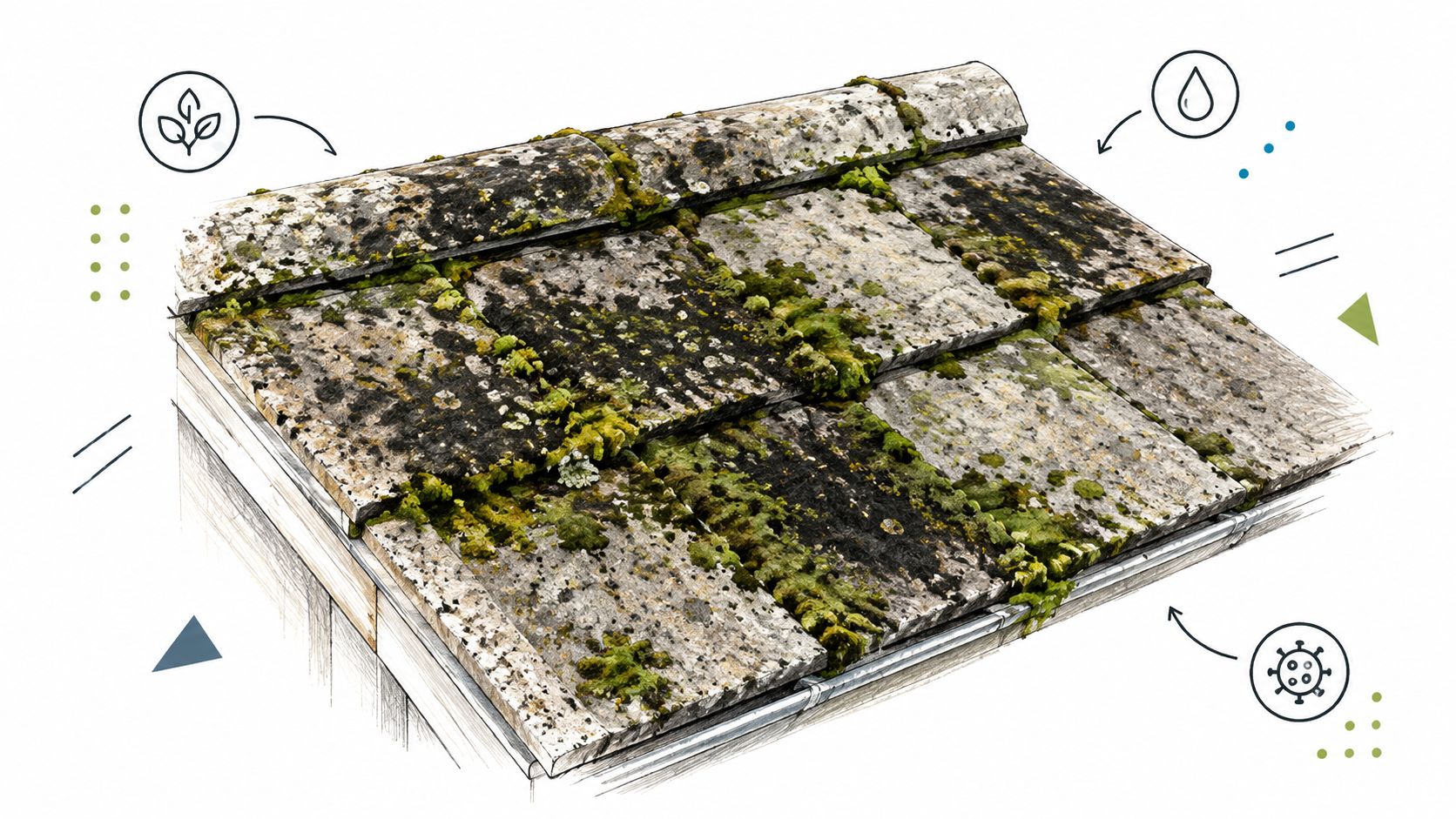
The commercial scope
Before approving a quote, require the contractor to address these points:
- Material identification: Record whether the roof is Colorbond steel, concrete tile, membrane, asbestos cement or another system.
- Condition review: Note corrosion, cracked tiles, exposed fasteners, failed sealants, brittle sheets, ponding and damaged penetrations.
- Access planning: Identify roof access points, fragile areas, edge protection, exclusion zones and restrictions around plant.
- Occupancy controls: Coordinate with tenants, workers, visitors and neighbouring properties where overspray, noise or falling debris could create exposure.
- Drainage protection: Isolate or protect downpipes and stormwater inlets before washing.
- Documentation: Capture photographs, defects, cleaning methods, products, waste controls and completion findings.
The commercial roof maintenance guidance belongs with the cleaning specification. A wash-down without inspection can conceal defects instead of resolving them. Dirt frequently gathers around laps, gutters, penetrations and plant plinths, the locations where leaks often start.
Why a standard pressure washer fails
High-pressure equipment can strip coatings, force water beneath laps, damage membranes and disturb fragile roof sheets. It also creates uncontrolled overspray, making it harder to protect neighbouring surfaces, landscaping and drainage systems.
Large roofs magnify every mistake. A poor access decision can affect an occupied warehouse, strata community or production facility. The contractor needs a site-specific method statement, suitable safety controls and a clear stop-work rule for conditions that differ from the quotation.
Treat roof cleaning services as integral maintenance within a wider asset-management programme. The objective is documented risk control, safe drainage and longer service life, with cleanliness as one visible outcome.
Practical rule: If the contractor can't explain the roof material, access method, runoff destination and waste controls before quoting, they aren't ready to clean the roof.
Cleaning Methods, Soft Wash vs Low-Pressure vs Chemical Treatments
Commercial roof cleaning requires a method matched to the roof, contamination and drainage controls. The wrong process can damage coatings, drive water into joints, spread polluted runoff or create repair and compliance costs. Assess the substrate, roof condition, nearby drains, weather and the consequences of disturbing the surface before approving the work.
Soft washing applies a controlled cleaning solution followed by gentle rinsing. It suits painted metal, selected tile systems and other compatible materials where aggressive mechanical action could damage coatings or force water into joints. The contractor must confirm chemical compatibility, shield nearby surfaces and control the wash water from application through disposal.
Low-pressure washing uses water and controlled mechanical rinsing at a level intended to reduce surface damage. It can remove loose dirt, silt and leaf debris after the roof has been assessed. Low pressure still carries risk. A badly directed stream can reach failed flashing, open laps or fragile sheets, causing water entry or worsening an existing defect.
Chemical treatment addresses biological growth or staining that water alone may not remove. Specify the product category, application area, dwell approach, weather restrictions, vegetation protection and residue controls. Unrestricted chemical application transfers risk to the roof, surrounding property and stormwater system.
| Method | Best For | Risk Level | Key Benefit |
|---|---|---|---|
| Soft wash | Organic growth and staining on compatible roof materials | Controlled, but dependent on correct chemical selection | Removes contamination with limited mechanical abrasion |
| Low-pressure wash | Loose dirt, silt and debris on sound surfaces | Moderate if defects or fragile areas are missed | Provides controlled rinsing without aggressive blasting |
| Chemical treatment | Localised moss, lichen, algae or pollution deposits | Moderate to high if runoff and compatibility are ignored | Targets contamination that water alone may not remove |
Match the method to the roof
For Colorbond steel, protect the coating and avoid abrasive action. Inspect corrosion around fasteners, laps and cut edges before washing. Removing dirt while leaving corrosion untreated is incomplete maintenance and can conceal a defect that needs repair.
For tiled roofs, check for cracked or displaced tiles, brittle surfaces and possible water entry around ridge lines and penetrations. Cleaning should not turn a minor tile defect into an internal leak.
For asbestos cement, determine whether cleaning is permitted and safe before selecting equipment or chemicals. High-pressure water and compressed air are prohibited on asbestos materials across Australia, as discussed in the following section. A contractor offering the same pressure setting for steel, tile and asbestos cement has skipped the required assessment.
What a proper method statement includes
Request a written sequence rather than a sales phrase such as “professional roof wash”. The document should state:
- The roof material and known condition.
- The proposed equipment and application technique.
- Chemical selection and surface compatibility.
- Access, fall prevention and exclusion controls.
- Downpipe isolation and wash-water containment.
- Weather limits and stop-work conditions.
- Final rinse, inspection and reporting requirements.
Speed of execution does not guarantee effectiveness, particularly when surface damage or contamination spread turns an apparent saving into repairs, tenant disruption and compliance work. Approve the method that controls those risks, even when it takes longer on site.
The Asbestos Risk and Legal Compliance
Older commercial roofs require an asbestos decision before a cleaning decision. Buildings constructed before 1990 are particularly likely to contain asbestos roofing or other asbestos products, and the national asbestos ban didn't take effect until 2003 (Asbestos Safety and Eradication Agency). Age doesn't prove that a roof contains asbestos, but it creates a clear reason to investigate before disturbing sheets, coatings or accumulated debris.
The scale of the legacy is substantial. The national residential mapping project identified approximately 13,000 buildings with asbestos roofing, representing around 1.4 million square metres of residential asbestos roofing, equivalent to about 213 football fields (Asbestos Safety and Eradication Agency). Commercial sites weren't included in those figures, so don't treat them as a count of warehouses or factories. Treat them as evidence that asbestos cement remains a practical building-management issue.
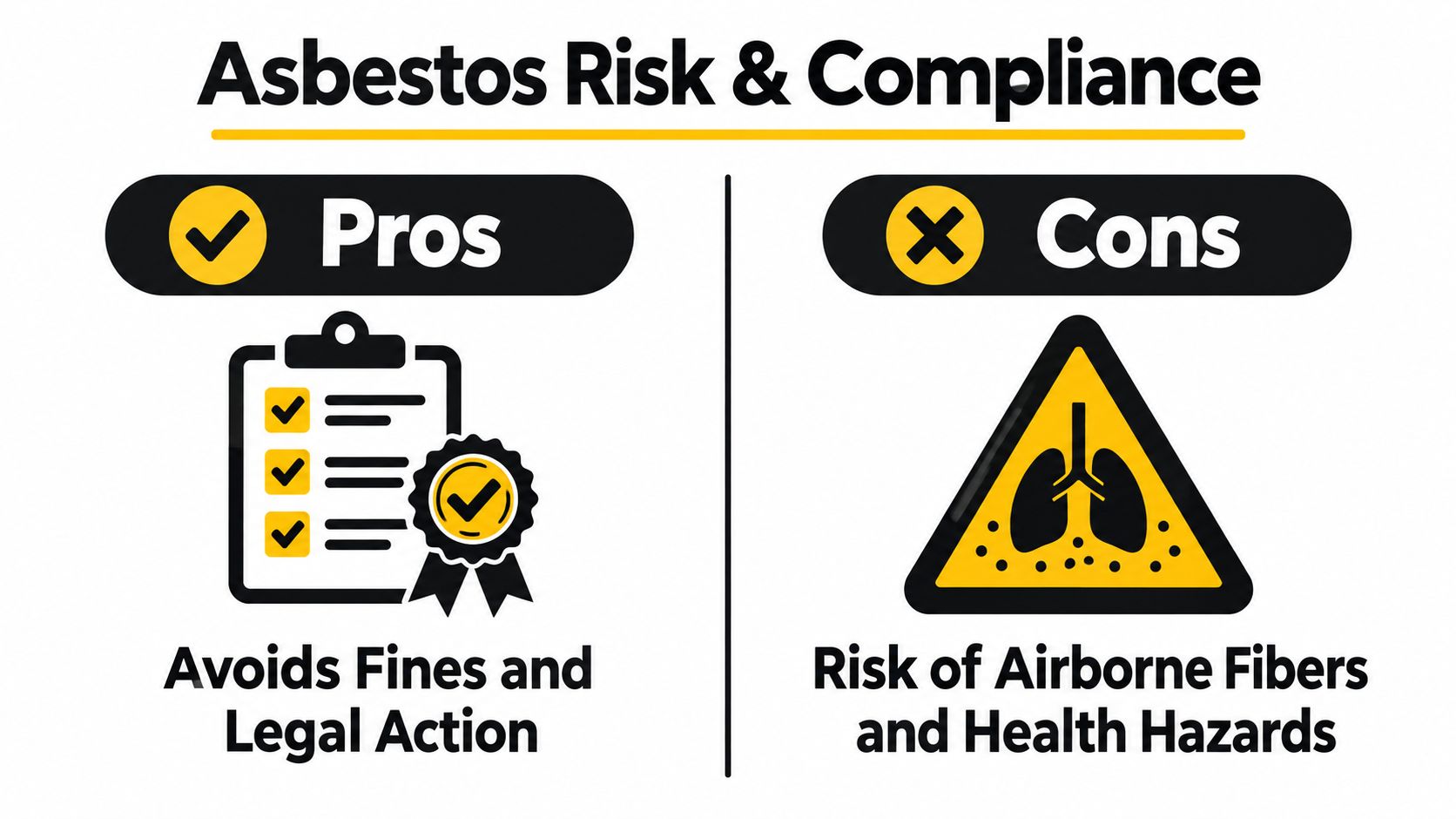
The prohibited methods
Australian authorities state that high-pressure water spray and compressed air are illegal on asbestos materials in every state. The reason is operational as well as health-related. The regulator's incident alert explains that no operating system can reliably capture or suppress fibres generated by high-pressure cleaning of asbestos cement (WorkSafe Queensland).
The same guidance warns against uncontrolled power tools and brooms because abrasion can disperse fibres. A March 2022 incident in Sherwood, Queensland involved an unlicensed painter using high-pressure water spray on a corrugated asbestos-cement roof before painting. The regulator's response reinforces the distinction between ordinary cleaning and regulated hazardous-material work (WorkSafe Queensland).
Improper cleaning can contaminate neighbouring properties, soil, vegetation, footpaths, roads and stormwater systems. The national asbestos authority reports that some improper cleaning incidents have required hundreds of thousands of dollars to rectify, alongside possible fines (Asbestos Safety and Eradication Agency).
The decision pathway
A responsible contractor should follow this sequence:
- Establish the history: Check construction records, previous refurbishment documents and known material registers.
- Inspect without disturbance: Look for visual indicators without drilling, scraping, sanding or breaking sheets.
- Presume or test appropriately: Suspect material should be managed through suitable asbestos assessment channels.
- Define the work category: Determine whether inspection, maintenance, encapsulation, isolation or removal is required.
- Use qualified workers: Licensed removal may be required for relevant asbestos work, as outlined by Safe Work Australia guidance for trades and construction workers.
- Control the site: Restrict access, coordinate occupants and document the method and decision.
A no-clean recommendation can be the correct commercial outcome. If the roof is damaged, friable or unsuitable for disturbance, encapsulation, isolation or replacement may protect the asset better than forcing a cleaning job through.
For owners comparing options, the asbestos roof removal and replacement guide provides useful context for deciding whether maintenance remains appropriate.
The cheapest quote is irrelevant if it turns a roof-cleaning job into a contamination incident.
Stormwater Management and Environmental Duty
Roof cleaning becomes an environmental compliance issue the moment water leaves the roof. Wash-water can carry sediment, bird waste, biological residue, corrosion products and cleaning chemicals into gutters, downpipes and stormwater inlets. That makes runoff control part of the work scope, not an optional courtesy.
Sydney Water states that regular roof maintenance can improve harvested rainwater quality, reduce blocked gutters and collection systems, and lower treatment requirements (Sydney Water commercial water-conservation guidance). Local-government guidance also warns that polluted wash-water shouldn't enter stormwater drains and recommends measures such as disconnecting downpipes, redirecting wastewater to gardens or holding tanks and using bunds to contain accidental spills (Sydney Water commercial water-conservation guidance).
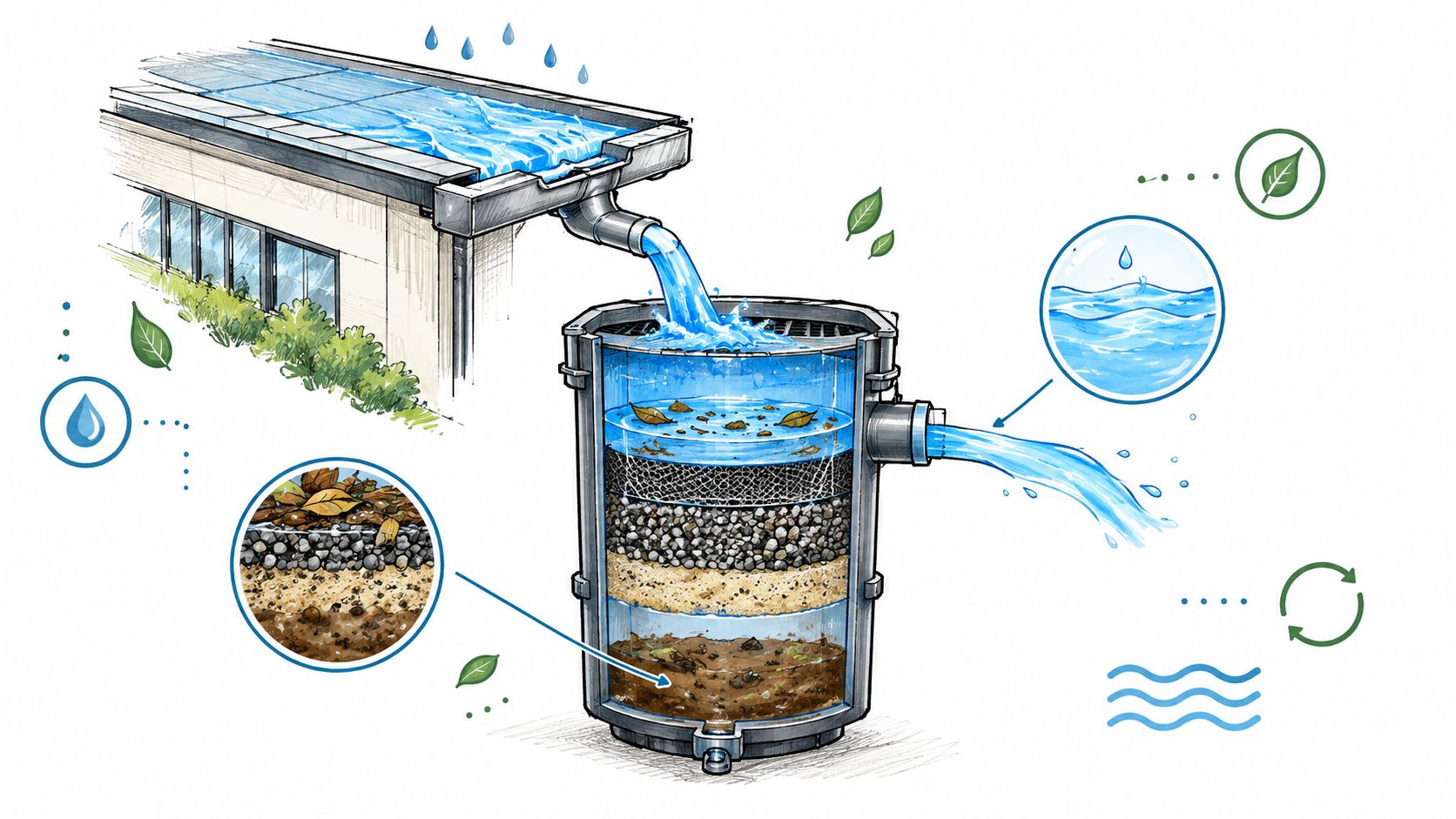
A site-specific runoff procedure
Before work starts, identify every discharge point. A commercial roof may drain through internal outlets, downpipes, box gutters, scuppers or collection systems that aren't visible from ground level.
The cleaning plan should cover:
- Pre-clean inspection: Photograph gutters, outlets, downpipes, roof plant and nearby stormwater inlets.
- Isolation: Disconnect or block downpipes where appropriate, without creating an uncontrolled overflow risk.
- Containment: Use bunds, drain covers, collection points or holding tanks suited to the site.
- Filtration: Separate leaves, silt and solid debris before any permitted discharge.
- Chemical control: Select products for the roof material and avoid applications before rain.
- Disposal: Confirm whether collected liquid requires controlled or licensed liquid-waste handling.
- Completion records: Photograph the cleaned roof, outlets, containment controls and any remaining defects.
A rainwater harvesting roof needs extra care. Cleaning residue can enter tanks and affect water quality, so the contractor must understand how the collection system operates before applying any product.
The gutter and drainage maintenance guidance is relevant because blocked gutters and poorly managed outlets can turn a cleaning operation into an overflow event.
A visual demonstration can help maintenance teams understand how roof collection and filtration systems interact with cleaning decisions.
The fastest wash isn't necessarily the most responsible one. A method that uses less labour but sends contaminated water into the stormwater network creates a liability that the building owner may have to manage long after the roof looks clean.
Cleaning Frequency and Cost-Benefit Analysis
Annual servicing is a defensible minimum baseline when inspection shows stable conditions. A University of Sydney roofing-system standard requires the maintenance and cleaning regime to be no less than annual and requires warranty-related maintenance conditions to be identified and approved before procurement (University of Sydney roofing-system standard).
That baseline isn't a universal calendar rule. Exposure should determine the schedule. A roof under trees may collect wet leaves and nesting material, while an industrial site can accumulate airborne deposits. Coastal locations, high-rainfall areas, shaded sections and roofs with gutters, sumps or box gutters that retain debris need closer attention.
Build the schedule around exposure
Use the site inspection to classify the roof by practical risk:
- Tree exposure: Leaves and organic matter hold moisture against the roof and can obstruct outlets.
- Industrial exposure: Dust, emissions and residue may accumulate around plant and drainage paths.
- Coastal exposure: Salt-laden air can accelerate corrosion on metal components and fasteners.
- Rainfall exposure: Heavy weather increases the consequence of blocked gutters and outlets.
- Building use: Warehouses, healthcare sites and strata properties may have different access and occupancy constraints.
The maintenance visit should remove wet leaves, silt and nesting material before they reach downpipes. It should also inspect drainage outlets, penetrations, flashings and visible roof defects. Cleaning without those checks is a missed maintenance opportunity.
Compare cost with consequence
Don't approve roof cleaning services on appearance alone. Compare the service cost with the consequences of blocked drainage, recurring moisture, damaged coatings, tenant disruption and emergency access.
A useful procurement record includes:
- The roof area and material.
- The contamination and access conditions.
- The proposed cleaning method.
- Runoff containment and disposal.
- Defects found before and after work.
- Warranty or manufacturer requirements.
- The recommended next inspection date.
The Victorian Building Authority identifies moisture, inadequate ventilation and high humidity as root causes that allow mould to develop, and warns that cleaning alone may remove visible mould without correcting the source (Victorian Building Authority condensation and mould guidance). That means a recurring stain may point to ponding, a failed penetration, condensation or an internal leak. Align the maintenance plan with the National Construction Code condensation provisions, including NCC Volume 1 Part F8 and Volume 2 Part H4 where applicable, rather than repeatedly paying for surface treatment.
Asset-management test: If the contractor's report doesn't tell you what caused the buildup and what needs watching next, you bought a wash, not a maintenance service.
Selecting a Qualified Commercial Roofing Contractor
Prioritise the contractor who can demonstrate full risk assessment before evaluating their cleaning approach. A commercial provider should explain material identification, access controls, worker qualifications, runoff containment, waste handling and post-work reporting in plain language.
Request these items before approval:
- Written scope: Name the roof material, access areas, cleaning method, exclusions and completion standard.
- Safety documentation: Provide the site-specific risk assessment, access plan and controls for fragile or hazardous areas.
- Asbestos capability: Explain how the company handles suspect materials and when it stops work or refers the site for licensed assessment or removal.
- Insurance evidence: Supply current certificates relevant to the work, not a verbal assurance.
- Runoff procedure: Detail downpipe isolation, drain protection, filtration, collection and disposal.
- Defect reporting: Include photographs and a written condition report in the deliverables.
- Workforce control: Identify who will perform the work and whether the provider uses trained crews or unverified subcontractors.
Obtain competing quotes only after each contractor has inspected the same conditions. A lower price may reflect a narrower scope, absent containment, inadequate reporting or a method unsuitable for the roof.
Commercial Roofers provides roof cleaning, debris removal, gutter and downpipe flushing, controlled chemical washing and wastewater containment for commercial, industrial, warehouse, retail and strata properties. Its wider services include inspections, roof restoration, Colorbond work, and asbestos roof removal and replacement. Inspection findings can therefore be referred to a different solution when cleaning is unsuitable.
The right result combines improved appearance with documented safety controls, drainage protection, warranty compliance and long-term asset preservation.
Commercial Roofers can inspect your commercial roof, identify material and moisture risks, specify a suitable cleaning method and set runoff controls before work begins. Visit Commercial Roofers to request a site assessment and a clear, itemised recommendation for your warehouse, industrial property, retail site or strata complex.