
NSW commercial box gutter replacement commonly sits at A$120 to A$250 per metre installed, while full large-building projects can land between A$50,000 and A$200,000. Residential gutter replacement is usually much lower, but that comparison stops being useful once membrane work, difficult access, structural repairs and stormwater compliance enter the quote.
That gap explains why a warehouse owner or strata committee can receive a per-metre figure that looks reasonable, then face a substantially larger project total. The gutter itself is only one part of the work. The roof edge, access method, drainage design and condition of the substrate often decide the final gutter installation cost.
Table of Contents
- What Gutter Installation Actually Costs in NSW in 2026
- How Sydney Quotes Are Structured Per Metre and Per Project
- The Six Cost Drivers That Move a Sydney Gutter Quote
- Comparing Gutter Materials for Commercial and Strata Roofs
- Labour Access Height and Compliance Add-Ons in Sydney
- Three Realistic Sample Quotes for NSW Commercial Projects
- Lifecycle Maintenance Costs and ROI of a Quality Install
- Questions to Ask Your Gutter Contractor Before You Sign
What Gutter Installation Actually Costs in NSW in 2026
The NSW commercial benchmark is A$120 to A$250 per metre installed for box gutter replacement, with larger commercial buildings commonly reaching A$50,000 to A$200,000 once access, waterproofing, outlets and associated repairs are included. These are genuine commercial quote ranges, not simple retail prices for a length of domestic fascia gutter. The range is documented in Australian commercial box gutter replacement cost guidance.
A small strata block with accessible fascia gutters may sit closer to a conventional replacement model. A warehouse with internal box gutters, membrane detailing, damaged framing and restricted roof access belongs in a different category altogether. Treating both as “gutter replacement per metre” is how owners end up comparing scopes that have almost nothing in common.
Residential guides provide a useful lower reference point. A typical single-storey home with roughly 45 to 55 linear metres of Colorbond or similar guttering is estimated at A$1,800 to A$4,500, while a straightforward single-storey Colorbond project is placed around A$40 to A$75 per metre. A double-storey home with a similar footprint can reach A$5,000 to A$9,000, largely because height changes labour time and safety equipment requirements, as outlined in this Australia-specific gutter installation cost guide.
NSW gutter installation cost ranges
| Project type | Per metre installed | Typical full project range |
|---|---|---|
| Single-storey residential Colorbond or similar | A$40–A$75 | A$1,800–A$4,500 |
| Double-storey residential replacement | Project-specific | A$5,000–A$9,000 |
| Commercial box gutter replacement in Victoria | A$80–A$150 | Scope dependent |
| Commercial box gutter replacement in NSW | A$120–A$250 | A$50,000–A$200,000 for large buildings |
The practical lesson is simple. Ask what the metre rate includes before using it to assess value. A low rate may cover only formed gutter and brackets. A compliant commercial quote may also include membrane waterproofing, sumps, overflows, flashings, safe access, removal and stormwater connections.
The rest of the quote should make those differences visible. If it doesn't, you're not comparing prices yet. You're comparing descriptions.
How Sydney Quotes Are Structured Per Metre and Per Project
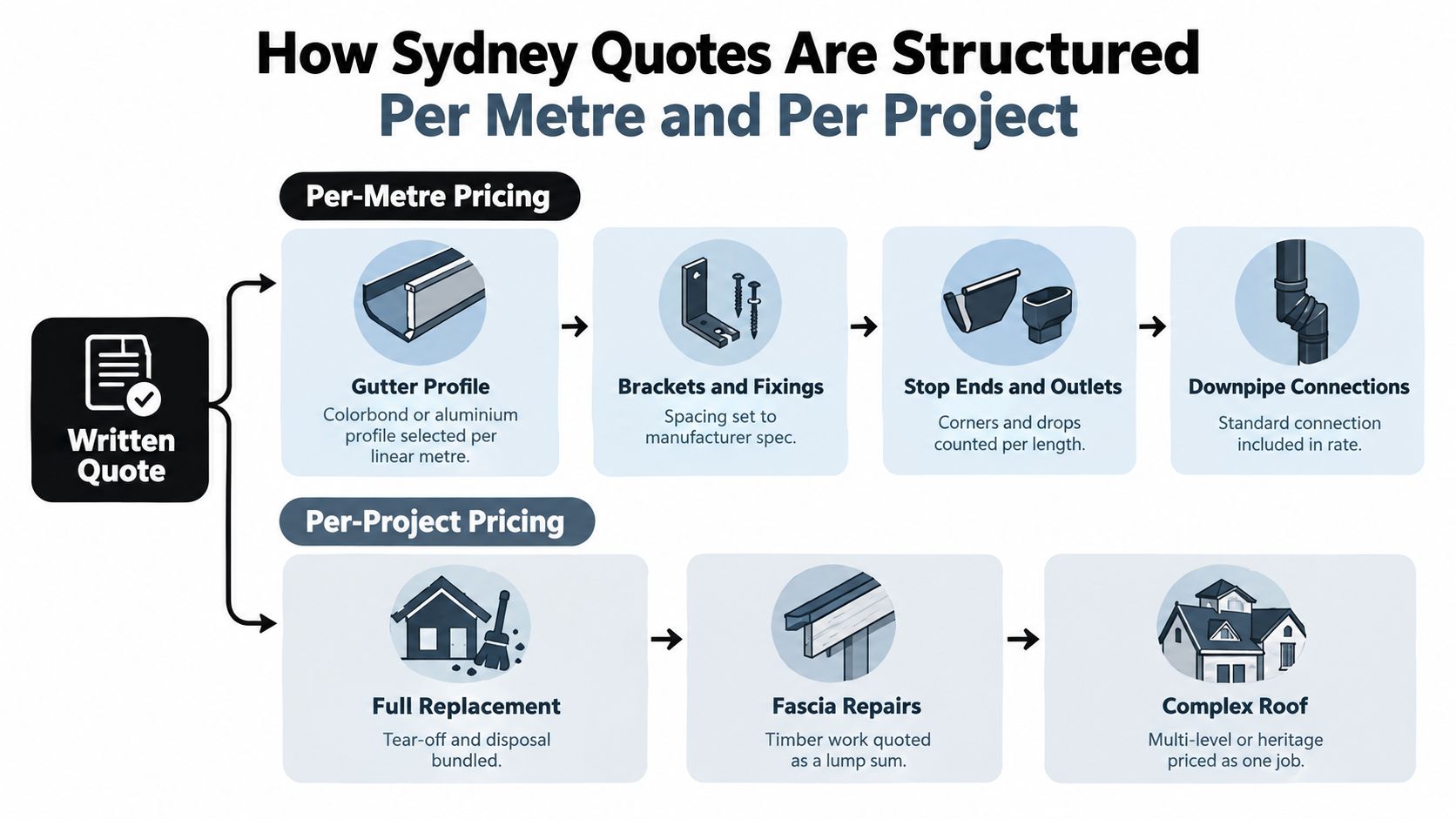
Sydney contractors generally price gutter work in one of two ways. The first is a per-metre rate, which is useful for straight, repeatable runs. The second is a lump-sum project price, which is more appropriate when the roof has multiple levels, internal box gutters, structural repairs or complicated drainage.
A per-metre rate commonly covers the selected gutter profile, brackets, standard fixings, stop ends, outlets and ordinary downpipe connections. It may not include scaffold, work platforms, flashing, membrane installation, asbestos handling, substrate repairs, disposal or stormwater upgrades. Those exclusions matter more than the headline rate.
What a written quote should separate
A project price can be easier to manage, but only when the contractor attaches a clear scope. Look for separate descriptions of:
- Supply-only work: Material is delivered, but installation, access and site handling remain your responsibility.
- Supply and installation: The contractor forms or supplies the gutter and installs it, with exclusions stated separately.
- Design and certification: The price includes drainage calculations, detailing, documentation or certification where required by the project.
- Provisional sums: Allowances for concealed conditions such as asbestos, rotten timber, insulation or stormwater alterations.
- Disposal: Removal and lawful disposal of old guttering, membrane, contaminated material or construction waste.
A provisional sum isn't automatically a problem. It becomes a problem when the allowance is vague, unsupported or used to conceal work that should have been inspected before the contract was signed.
Practical rule: A quote should tell you what happens when the crew uncovers soft fascia, failed membrane or an undersized stormwater connection.
For tendering, strata committees and facility managers, a structured proposal is easier to circulate and approve. If you need a reusable commercial format, you can find sales proposal pricing before requesting bids. The document should still be adapted to the actual roof, access plan and drainage scope.
To compare two quotes fairly, add every relevant allowance to the base installation figure, then divide the total by the measured gutter length. Use the true installed rate, not the advertised metre rate. A contractor quoting A$150 per metre may be including access and membrane work, while another may be excluding both. The two numbers aren't comparable until the scopes match.
For installation methods and the practical sequence of work, see this guide to how to install new gutters. The method matters because poor falls, weak fixings and badly positioned outlets create costs that only appear after the next significant storm.
The Six Cost Drivers That Move a Sydney Gutter Quote
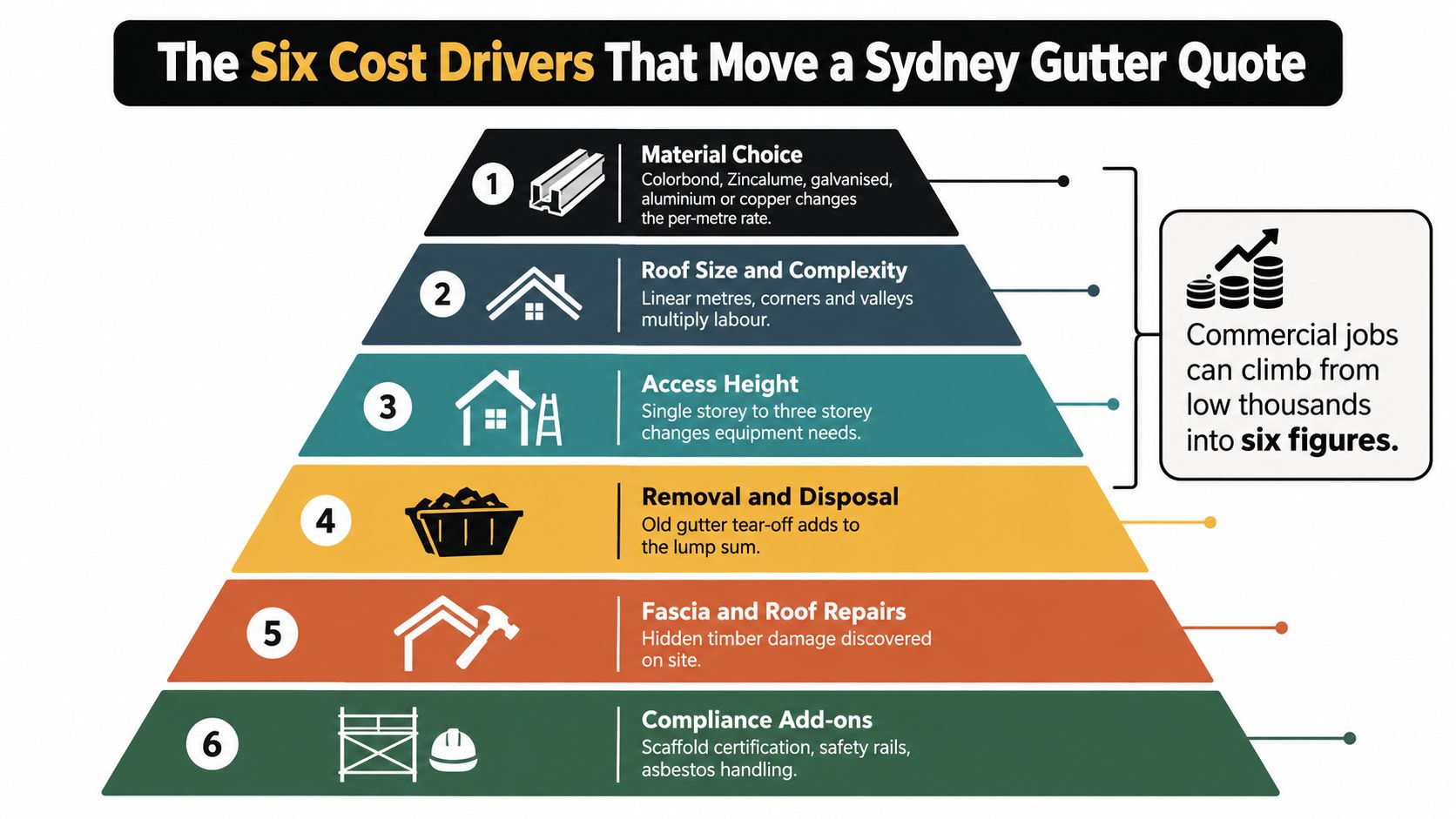
A gutter length is only the first measurement on a Sydney commercial quote. The meaningful comparison is what that length requires the crew to supply, access, modify and certify once the roof is opened.
Material choice
Colour-coated steel, Zincalume, galvanised steel, aluminium, stainless steel and PVC have different supply and handling costs. Thickness, profile, finish and availability can change the installed rate even when the measured length is identical. A cheaper material can also create extra work if its fixings, expansion details or compatibility do not suit the existing roof.
Gutter type
A domestic fascia gutter is relatively straightforward. A box gutter, internal sump or high-capacity commercial profile needs accurate falls, outlets, overflow detailing and junction work. The quote covers a drainage assembly, not just a folded length of metal. That distinction matters on warehouses and strata buildings, where a poor outlet position can affect the roof and stormwater system together.
Roof access
Access may require scaffold towers, edge protection, a work platform, roof anchors, traffic control or staged material handling. A clear ground-level perimeter is a different job from a warehouse roof surrounded by loading zones, plant and operating tenants.
Box gutter complexity
Internal gutters often need membrane waterproofing, custom flashings, sumps and overflow details. If water has entered the roof build-up, the scope may extend to damaged timber, substrate or framing. A low quote can exclude those conditions and leave the waterproofing problem unresolved.
Insulation and asbestos
Older strata and industrial buildings may contain asbestos around roof edges, eaves, flashings or adjacent roofing products. Suspected material requires specialist assessment, controlled removal and approved disposal. It cannot be handled as ordinary gutter demolition. Insulation can also affect access, cutting methods and the time needed to protect the roof interior.
Falls and flashing
Old gutters can conceal incorrect falls, failed apron flashings and damaged roof edges. Removal may show water tracking behind the fascia or beneath the roof sheet. The replacement then needs the edge condition corrected, with brackets and flashings set to direct water into the outlet rather than behind the building envelope.
A Sydney strata example shows how one discovery changes the quote. A visible gutter replacement may start as a clean, accessible run. Once removed, soft fascia and a failed membrane at an internal junction can require carpentry, waterproofing and revised sequencing. The measured gutter length has not changed, but the work has changed materially.
Before comparing allowances, review this Australian breakdown of hidden gutter replacement costs for the line items contractors may separate from the visible gutter supply. Two quotes can show the same metre rate while one includes tear-off, disposal and flashing and the other prices only the gutter profile. Judge the inclusions, access plan and drainage scope before deciding which contractor is cheaper.
Comparing Gutter Materials for Commercial and Strata Roofs
Material selection should follow the building's exposure, drainage demand and maintenance plan. Colour-coated steel is a familiar choice for many strata and commercial roofs because it provides a coordinated finish and works with common metal roofing systems. Zincalume is often considered where finish matching is less important, while stainless steel belongs in projects where corrosion resistance and a premium specification justify the higher supply cost.
PVC has a place on straightforward, accessible work, but it deserves caution on commercial sites. Long roof runs, exposed locations and buildings where appearance or fire and construction specifications matter can make a metal system more appropriate. Aluminium may suit some coastal or corrosion-sensitive applications, but the contractor should confirm profile availability, thickness, fixings and compatibility with adjacent materials rather than treating it as an automatic upgrade.
The supplied Australian cost data shows how widely installed rates vary by material. Vinyl or PVC is listed at A$30 to A$35 per metre, Zincalume at A$30 to A$50, colour-coated Zincalume at A$45 to A$67, and stainless steel at A$85 to A$160, according to this Australian gutter replacement cost comparison.
Gutter material comparison for NSW commercial projects
| Material | Installed price per metre AUD | Typical NSW use | Key trade-off |
|---|---|---|---|
| Vinyl or PVC | A$30–A$35 | Accessible, lower-complexity replacement work | Lower entry cost, but check suitability for the building and roof run |
| Zincalume | A$30–A$50 | Practical commercial and utility applications | Functional finish, with specification and exposure still needing review |
| Colour-coated Zincalume | A$45–A$67 | Strata and commercial roofs where colour coordination matters | Higher cost than plain Zincalume, with finish matching to confirm |
| Stainless steel | A$85–A$160 | Premium or corrosion-sensitive applications | High material cost, justified only where performance or appearance demands it |
| Aluminium | Project-specific | Selected coastal or corrosion-sensitive sites | Confirm profile, thickness, fixings and compatibility before approval |
Box gutter liners change the discussion again. An internal system may require a membrane, careful termination and detailed treatment around sumps and outlets. In that situation, choosing a cheaper visible gutter material doesn't remove the cost of waterproofing underneath it.
Ask for the proposed profile, material thickness, finish, fixing method and warranty conditions. A quote that says only “metal gutter” isn't specific enough for a commercial approval process. The written specification should also identify how the system interfaces with the roof sheets, fascia, flashings and stormwater outlets.
Labour Access Height and Compliance Add-Ons in Sydney
A gutter quote should show how the crew will reach the work, not just what they intend to install. Ground-level ladder access, scaffold access and work platform access create different setup times, site controls and productivity constraints. The roof may be only one storey high, but a narrow boundary, fragile awning or active loading zone can still make access difficult.
Sydney labour also varies by location and site conditions. A published Australian guide reports installation labour at about A$60 per hour in Sydney, compared with roughly A$55 per hour in Adelaide, Brisbane and Melbourne. The difference is only one part of the cost. Setup, supervision, travel, parking, equipment movement and site restrictions can have a larger effect on a commercial quotation.
Access changes the work method
Single-storey access may allow straightforward ladder staging where the ground is stable and the work area can be isolated. Two-storey work may require scaffold or a suitable raised platform. Higher or more restricted levels can require a more involved access plan, documented controls and additional time for moving materials safely.
A contractor should identify whether the price includes:
- Scaffold or platform hire: Equipment, delivery, erection, dismantling and any required certification.
- Edge protection: Rails, barriers and controls around exposed roof edges.
- Site coordination: Traffic management, tenant access controls and protection of vehicles or stock.
- Out-of-hours work: Scheduling around an operating warehouse, retail site or medical facility.
- Waste handling: Separate treatment for ordinary metal, membrane waste and suspected hazardous materials.
Compliance belongs in the scope
The final design must deal with falls, outlets, overflows, flashings and discharge routes. For strata and commercial work, request written confirmation of the proposed drainage approach and ask what documentation will be issued at completion. If council, building management or a strata approval process applies, the contractor should state who prepares and supplies the relevant documents.
Under-quoters often omit the details that keep water inside the drainage system. Missing overflows, poorly terminated flashings and inadequate cross-sectional documentation can leave an owner with a new gutter that still fails during heavy rainfall.
A compliant installation isn't defined by the metal visible from the ground. It includes the access method, drainage details, waterproofing interfaces and completion records.
Three Realistic Sample Quotes for NSW Commercial Projects
The following examples describe quote structures rather than invented price promises. The final amount depends on measured length, access, substrate condition and the approved drainage design. Use them to test whether a contractor has allowed for the right work.
Small strata walk-up
A small inner-west strata block may have accessible fascia gutters, a modest number of corners and one downpipe that no longer discharges effectively. A sound quote should identify the measured gutter length, selected profile, removal and disposal, minor fascia work, downpipe alterations, sealants and any repainting or making-good.
The committee should ask for photographs of the fascia before approval. If the contractor has included only a provisional allowance for timber repair, the committee should understand how the rate will be calculated if more damage appears after removal.
Medium warehouse
A Western Sydney warehouse with internal box gutters needs a different tender document. The scope should identify membrane work, sump treatment, overflow details, access equipment, isolation of work areas, removal of the existing system and disposal arrangements.
The owner should also ask whether the quote includes substrate repairs beneath the failed membrane. If it doesn't, the contract needs a clear process for approving variations before concealed work proceeds. A low lump sum with no exclusions may look attractive, but it can create disputes once the roof is opened.
Large industrial roof
A large industrial roof may involve long runs, multiple drainage zones, restricted access, active operations and work outside normal trading hours. A complete proposal should separate the gutter system from stormwater conversion, access, safety controls, temporary protection, testing, documentation and final clean-up.
For larger buildings, the cost may sit within the A$50,000 to A$200,000 range documented for major commercial box gutter projects, depending on the scope and site conditions. The useful question isn't whether the quote sits at the top or bottom of that range. It's whether the contractor has priced the actual risks rather than transferring them into uncontrolled variations.
Across all three examples, retain a contingency for concealed fascia, framing, membrane and drainage issues. Don't approve a quote that hides those items behind a single phrase such as “repairs as required”.
Lifecycle Maintenance Costs and ROI of a Quality Install
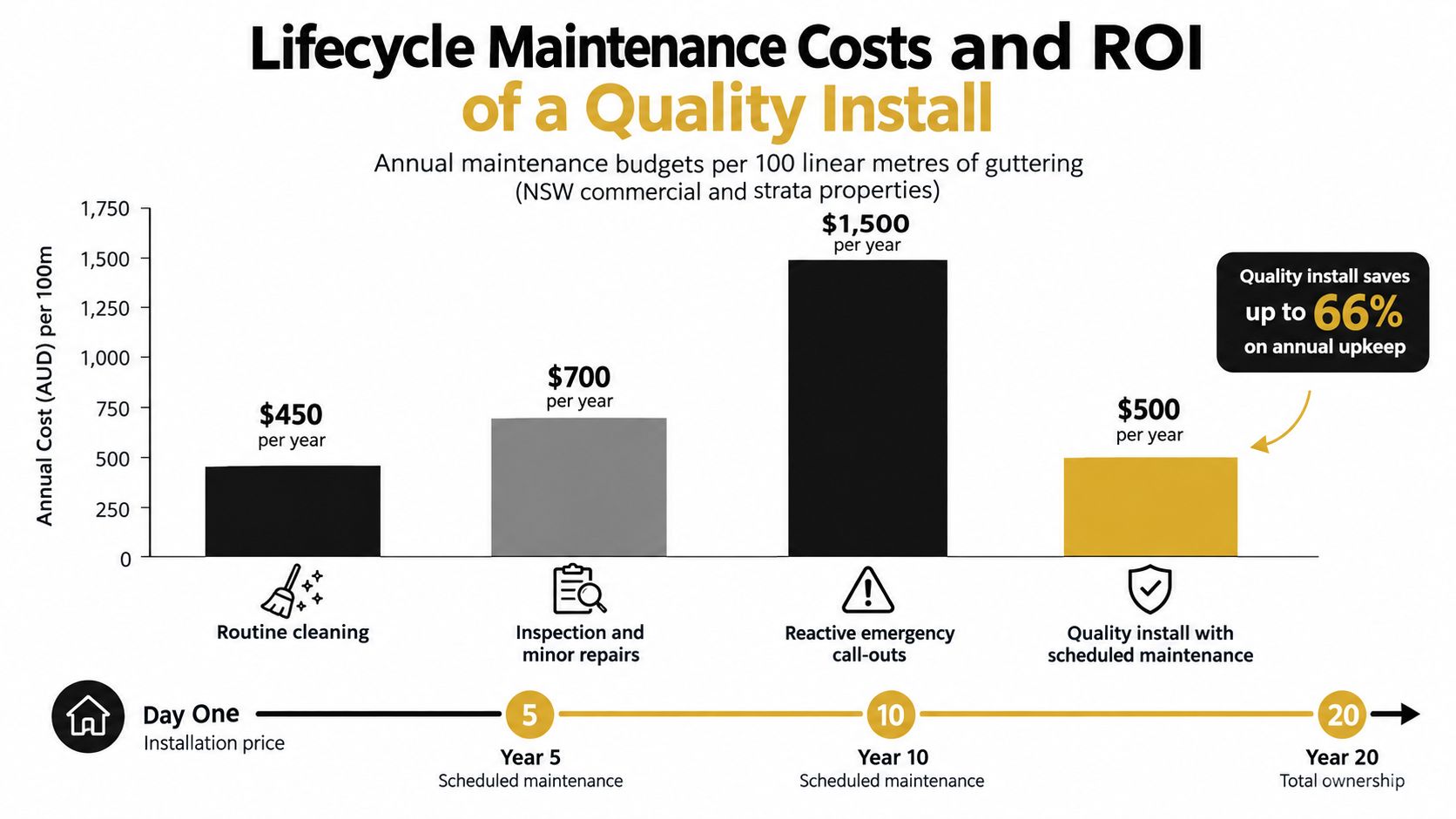
The cheapest installation can become expensive if it leaves poor falls, weak supports or inaccessible inspection points. Commercial and strata owners should assess the roof edge as an operating asset, not a one-off building expense. A system that can be inspected, cleaned and repaired without dismantling adjacent work is easier to manage over its service life.
Routine maintenance should be documented by roof zone. The record should show where debris was found, whether outlets and overflows were clear, whether membranes or sealants were deteriorating and whether any fascia movement was visible. That history helps a strata committee distinguish normal maintenance from a developing defect.
Where quality creates value
A properly detailed system reduces the chance that minor defects become internal water damage. It doesn't eliminate maintenance, blockages or storm damage, but it gives the maintenance contractor a sound base to work from. Good access and clear inspection points also make it easier to identify a failed seal, displaced flashing or blocked outlet before the roof space is affected.
The lifecycle decision should consider:
- Access for cleaning: Can workers reach outlets and sumps safely without improvised access?
- Material compatibility: Are fasteners, flashings, membranes and gutter materials suitable for the exposure?
- Fall and capacity: Does the system direct water to the intended outlets without persistent ponding?
- Repairability: Can a damaged section be isolated and repaired without replacing an entire roof edge?
- Documentation: Does the owner receive photographs, product details and completion records?
For programmed inspections and cleaning, use a written maintenance schedule rather than waiting for an overflow complaint. This commercial gutter maintenance guide provides a practical framework for managing that work across commercial properties.
A quality installation usually costs more on day one because the contractor has allowed time for design, safe access, proper waterproofing and a complete handover. The return comes through fewer emergency interventions, clearer responsibility and less disruption to tenants or operations. That is a more reliable ROI calculation than comparing two unitemised metre rates.
Questions to Ask Your Gutter Contractor Before You Sign
A commercial gutter quote should survive a committee meeting, a facilities review and a wet-season inspection. Ask the contractor to answer the following in writing.
Credentials and comparable work
- Who is responsible for the work? Confirm the contractor's NSW licence details, insurance arrangements and in-house or subcontracted labour.
- Have you completed comparable sites? Request references for strata, warehouse or industrial work with similar access and gutter types.
- Who supervises the site? Identify the person responsible for safety, quality checks and communication with the owner or manager.
Scope and price transparency
- What is measured? Confirm total gutter length, profile, material, thickness, outlets, sumps and downpipes.
- What is excluded? Look specifically for scaffold, access equipment, disposal, membrane, flashing, fascia, insulation and stormwater work.
- Which items are provisional? Require separate allowances and an approval process for asbestos, concealed timber damage and other unknown conditions.
- Is the price fixed? Understand any rise-and-fall clause, variation process, rain delay provision and payment milestones.
Compliance and warranty
- What drainage details are being provided? Ask for the proposed falls, outlet arrangement, overflow treatment and discharge route.
- What documents arrive at handover? Request photographs, product information, inspection records and any required certification or sign-off.
- What does the warranty cover? Separate material coverage from workmanship coverage and list exclusions such as blockage, storm damage or owner maintenance.
- How will defects be handled? Get response times and the procedure for reporting leaks or failed joints.
A clear contract is as important as the gutter profile. For larger projects, a resource on master construction contract management can help owners organise scope, variations, approvals and records. Before approving fascia-related work, review the details in this guide to fascia and gutter replacement.
Ask three final questions before signing:
- Who confirms the stormwater connection is suitable for the completed system?
- Who provides the final compliance or completion documentation?
- What happens if the installed system doesn't perform as specified?
Commercial Roofers offers commercial gutter installation, box gutter repair, fascia and gutter replacement, inspections and maintenance across Sydney and NSW. For an itemised assessment of access, drainage, membrane and roof-edge conditions, visit Commercial Roofers and request a quote that separates the visible gutter work from the hidden cost drivers.