
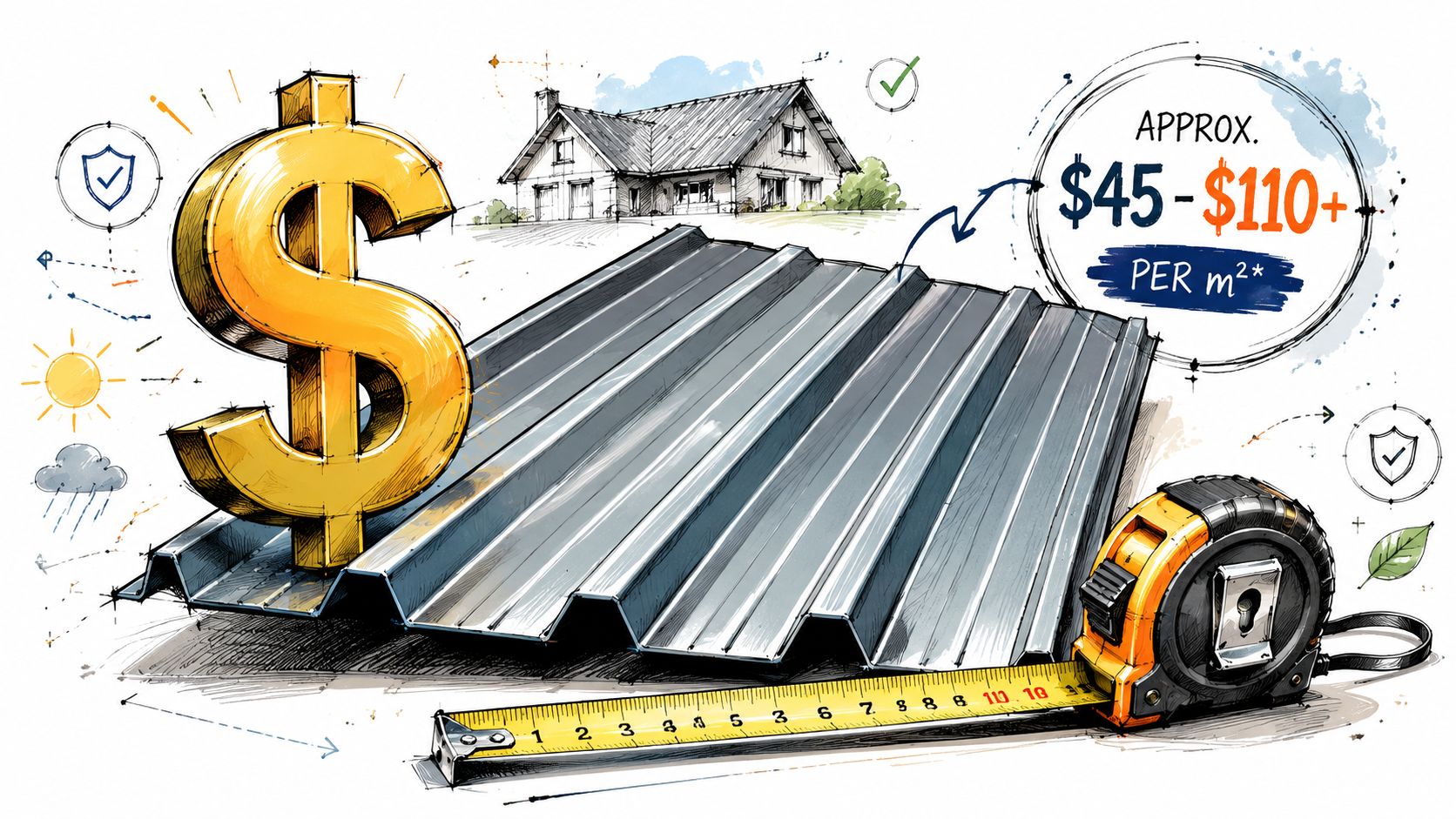
Professional Colorbond roof installation typically sits between $53 and $97 per square metre. That's the right starting point, but for Sydney commercial work it's only a baseline, because access, compliance, profile choice, structural prep and asbestos risk can push the actual cost well beyond a simple square metre rate.
If you're pricing a new roof for a warehouse, strata block, factory or retail site, you're probably already seeing quotes that don't line up. One contractor gives you a clean per metre rate. Another adds demolition, access equipment and safety controls as separate items. A third looks cheap until you notice the scope is vague. That's normal in commercial roofing, and it's exactly why the headline price rarely tells the full story.
For most business owners, the mistake isn't asking “what does a Colorbond roof cost?” The mistake is assuming every roof can be priced the same way. In Sydney, the jobs that stay on budget are the ones priced around site conditions from day one.
Table of Contents
- Understanding the Baseline Cost of a Commercial Colorbond Roof
- The Major Cost Drivers for Commercial Projects
- Costs for Advanced Installations and Premium Profiles
- Worked Examples Commercial Cost Estimates in Sydney
- How to Budget and Compare Commercial Roofing Quotes
- Project Timelines Warranties and Calculating Long-Term ROI
- Making the Right Investment in Your Commercial Property
Understanding the Baseline Cost of a Commercial Colorbond Roof
The national baseline for Colorbond roof installation cost is $53 to $97 per square metre for professional installation in Australia, with New South Wales generally sitting at the higher end of the range according to hipages' 2026 Colorbond roofing cost guide.
That figure is useful, but only if you read it correctly. It usually reflects a straightforward installation with standard sheeting and ordinary labour conditions. In residential guides, it often assumes a simpler roof shape, easier access and no major remediation work before the new roof goes on.
Commercial sites rarely fit that best-case model.
What the baseline price usually covers
In practical terms, a baseline rate often includes the essentials:
- Standard roof sheeting: Basic Colorbond-type sheet supply for a conventional profile.
- General installation labour: Crews fixing sheets, flashings and standard trims.
- Normal working conditions: Reasonable roof access and no unusual shutdown requirements.
- Routine replacement scope: Taking off similar material and fitting similar material in its place.
What it usually leaves out
Budgets often blow out. On a commercial job, the square metre rate often excludes costs that matter more than the sheet itself.
- Asbestos handling: Removal, containment, transport and disposal can change the whole job.
- Structural preparation: Purlin work, substrate correction and rectification if the existing roof isn't ready for metal.
- Insulation and sarking upgrades: These are common on commercial replacements but not always included in a headline rate.
- Access systems: Scaffolding, edge protection, traffic management and crane lifts.
- Operational constraints: Work staged around tenants, production, deliveries or public access.
Practical rule: If a quote looks clean and simple, check whether it's simple because the site is simple, or simple because major scope items have been left out.
The baseline is still worth knowing because it gives you a reference point. If your site is a low-risk, easy-access industrial building with a direct metal-for-metal replacement, your cost may track closer to it. If your property is older, occupied, awkward to access or being upgraded to a more advanced roof system, the actual cost comes from the variables below, not the baseline alone.
The Major Cost Drivers for Commercial Projects
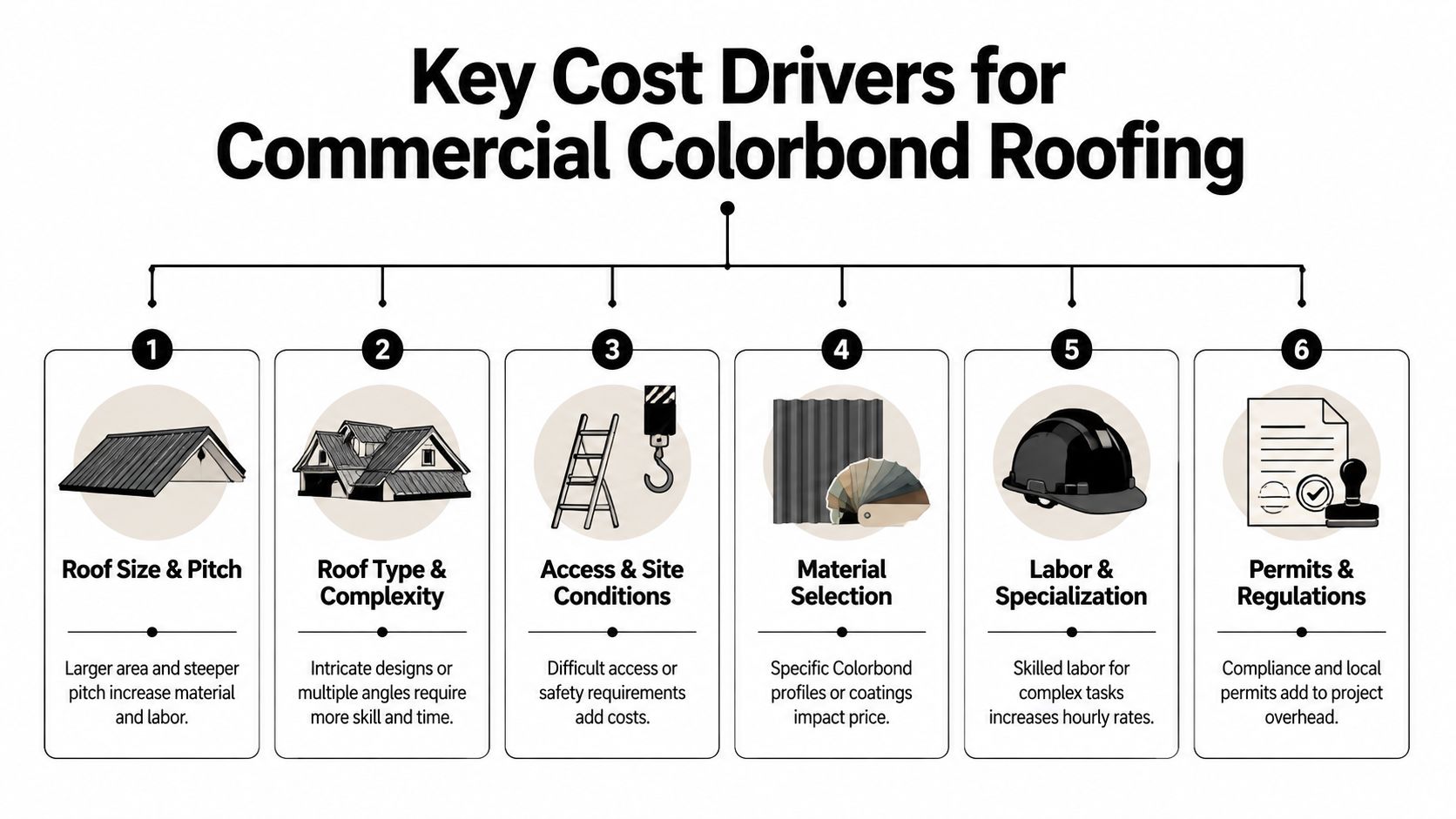
A commercial roof is priced by constraints. Area matters, but complexity usually decides the margin between an ordinary job and an expensive one.
Size shape and roof geometry
Large roofs aren't automatically inefficient to replace. In fact, broad simple spans can be easier to price than smaller roofs with multiple penetrations, valleys, box gutters, parapet interfaces and changes in level.
A warehouse with long clean runs of sheeting is usually more predictable than a mixed-use building with plant platforms, service penetrations and tight detailing around neighbouring properties. Every interruption slows installation, creates more flashing work and increases the amount of cutting, sealing and checking.
Profile choice matters as well. Standard corrugated or conventional commercial sheet profiles are usually quicker to install than more architectural systems. If you want a broader look at how profile and finish choices affect metal roofing decisions, this guide to metal roofing systems in Australia is a useful reference point.
Access safety and live site conditions
Two buildings can have the same roof area and very different labour costs. The reason is access.
If crews can move materials easily, stage work safely and work without stopping site operations, installation is more efficient. If the site needs traffic separation, after-hours work, restricted loading windows or additional height safety controls, labour hours rise fast. Commercial clients often focus on sheet price first, but site logistics can be the bigger line item.
A difficult roof isn't always steep. Sometimes it's flat, busy, occupied and surrounded by things you can't shut down.
Common cost triggers on live commercial sites include:
- Occupied tenancy: Noise restrictions, staged works and weatherproofing in small sections.
- Tight access: Limited room for lifts, deliveries or waste bins.
- Height safety requirements: Extra edge protection and more controlled movement on site.
- Weather exposure: Large openings can't be left vulnerable if stock, equipment or tenants sit below.
Asbestos and NSW compliance costs
This is the biggest blind spot in many early budgets. A lot of generic guides treat asbestos removal as a broad allowance, but Sydney commercial work doesn't behave like a national average.
For NSW projects, disposal levies of $1,200 to $1,800 per tonne and mandatory certified containment can inflate project costs by 25 to 40 percent for commercial properties over 200m², as stated in the verified project data provided for this article. That's not a cosmetic add-on. It affects labour sequencing, site controls, transport, disposal booking and compliance documentation.
The practical issue is timing as much as price. Once asbestos is confirmed or strongly suspected, the roof replacement becomes a regulated removal project first and a roofing project second. Clients who budget only for sheeting and labour usually find out too late that compliance is carrying the programme.
A sensible quote for an older Sydney commercial roof should state, in plain language, whether asbestos is excluded, included as a provisional item, or subject to testing and a separate removal scope. If it's silent on that point, you're not looking at a complete price.
Costs for Advanced Installations and Premium Profiles
A Sydney commercial roof stops being a simple replacement once the new system needs different support, different detailing, or a higher finish standard. That is where budgets move fast, and generic per-square-metre guides stop helping.
When a replacement becomes a retrofit
Tile-to-metal conversion is the clearest example on older Sydney sites. The roof covering changes, but so does the build-up underneath. Battens, spacing, tie-down, underlay, flashings, and sometimes parts of the supporting structure all need review before new sheets go on.
For Sydney commercial projects, tile-to-metal conversions generally price above a direct metal-for-metal replacement. The extra cost usually comes from strip-out labour, heavier waste volumes, frame adjustments, sarking, and more time spent making the roof ready for the new system. On these jobs, the client is paying for conversion work as much as roofing work.
That distinction matters on older buildings.
If the quote treats a conversion like a straightforward resheet, the shortfall usually appears later as variations for framing changes, substrate preparation, or compliance items that should have been identified at tender stage.
Premium profiles and why they change the budget
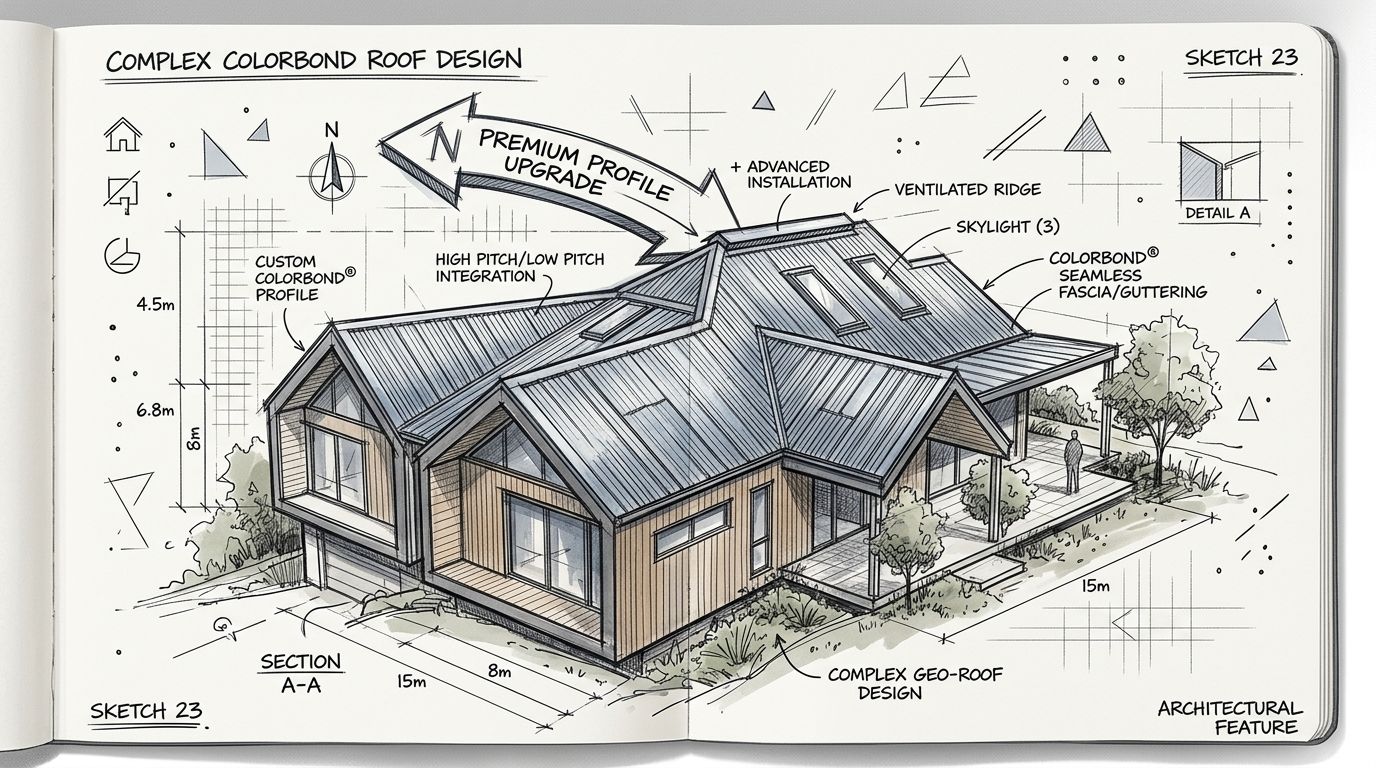
Standing seam and other architectural profiles sit in a different pricing bracket from standard corrugated or trapezoidal Colorbond sheets. The material cost is higher, but labour is usually the bigger reason the installed rate climbs. These systems need straighter lines, tighter tolerances, cleaner set-out, and more care around penetrations, parapets, box gutters, and tapered roof areas.
On commercial work in Sydney, I would only price a premium profile after checking three things. Substrate condition. Detailing complexity. Access for long sheet handling or roll-forming on site. Miss any of those, and the first budget figure will be light.
Thermal performance can also improve with the right roof build-up, insulation package, colour selection, and ventilation strategy, but those savings depend on the whole system, not the profile alone. Owners often focus on the look of standing seam and overlook the primary cost driver, which is the level of detailing required to make it weather-tight and visually clean over a large commercial area.
For a side-by-side material comparison before choosing a finish, this guide to Zincalume vs Colorbond roofing is a useful starting point.
| Roof approach | Upfront cost position | Best fit | Common mistake |
|---|---|---|---|
| Standard commercial Colorbond | Lower entry point | Warehouses, factories, and straightforward replacements where function and speed matter most | Comparing the cheapest rate only, without checking inclusions for insulation, flashings, and rainwater goods |
| Standing seam or interlocking profile | Higher installed rate | Offices, retail, education, and architect-led projects where presentation and detailing affect asset value | Pricing it against basic sheeting as if installation time, substrate requirements, and finish expectations are the same |
A premium roof can be the right commercial decision. It just needs to be costed as a different system, not as a prettier version of a standard sheet roof.
Worked Examples Commercial Cost Estimates in Sydney
A Sydney owner usually gets into trouble when they price by area alone. Two roofs can be the same size and land far apart on final cost because one is a clean replacement and the other carries demolition, compliance, access limits, or a full roof-system change.
These examples are a better way to test your budget. Match your building to the job condition, then check whether the quote reflects the required work. If you need a clearer picture of what sits inside the install scope, this guide to the commercial roof installation process helps frame the moving parts.
Example one small straightforward warehouse replacement
A small warehouse with an existing metal roof, clear access around the building, and no known hazardous material sits closest to the lower-risk end of the market.
On this type of project, pricing is usually steady because the crew can remove and replace in a predictable sequence. The questions that change the number are usually scope items, not surprises. Are flashings included? Are gutters and downpipes being replaced? Is there an insulation upgrade? Is the site occupied and needing staged work?
A good quote for this job should read plainly and leave little open to interpretation. Straight roof runs, simple penetrations, and easy access usually produce the cleanest commercial pricing in Sydney.
Example two tile to metal conversion on a larger site
A larger site with an older tiled roof is a different class of job. Owners often expect a replacement rate and then get caught by the conversion costs.
Earlier benchmarks in this article put Sydney tile-to-metal conversions at a materially higher installed rate than a direct metal re-roof. That premium usually comes from four places:
| Cost area | What drives it |
|---|---|
| Removal of old roof | Tile stripping, breakage, waste handling, and slower labour output |
| Roof preparation | Purlin adjustments, frame checks, and making the structure suitable for the new sheet profile |
| Underlay and weatherproofing | Sarking and related roof build-up items required for the new system |
| New installation | Metal sheeting, flashings, ridges, rain heads, gutters, and finishing details |
Commercial budgets can blow out early during a tile roof conversion. A tile roof conversion is usually part demolition project, part roof upgrade, and part compliance exercise. If the building is older, the risk of uncovering additional framing work or hazardous material is higher as well.
Treat it as a conversion from day one. That usually produces a more accurate allowance and fewer disputes once work starts.
Example three older industrial building with asbestos risk
An older industrial site in Western Sydney can look simple from the street and still become the most expensive job in the tender pack.
If asbestos is confirmed, or even suspected, the cost stack changes before the new roof goes on. Testing, licensed removal, site controls, transport, and NSW disposal levies can become the major budget items. On some projects, the new Colorbond roof is the easy part.
There is no honest single rate for this scenario until the hazardous material scope is clear. Early estimates often fail because they price the replacement roof but leave the regulated removal process vague or provisional. The cheapest early estimate on an asbestos-affected site is often the one that hasn't priced the complete job yet.
Use the examples above as a quick screening tool:
- Closest to Example one: Existing metal roof, open access, and a replacement scope with limited unknowns.
- Closest to Example two: Full roof-system change, heavier demolition, and likely frame or underlay upgrades.
- Closest to Example three: Older property, incomplete records, and compliance costs that may outweigh the roof install itself.
How to Budget and Compare Commercial Roofing Quotes
Good quote comparison starts before the first contractor visits site. If the brief is vague, the pricing will be vague too. That's how one quote appears cheap and another appears expensive, even though they may be pricing different scopes.
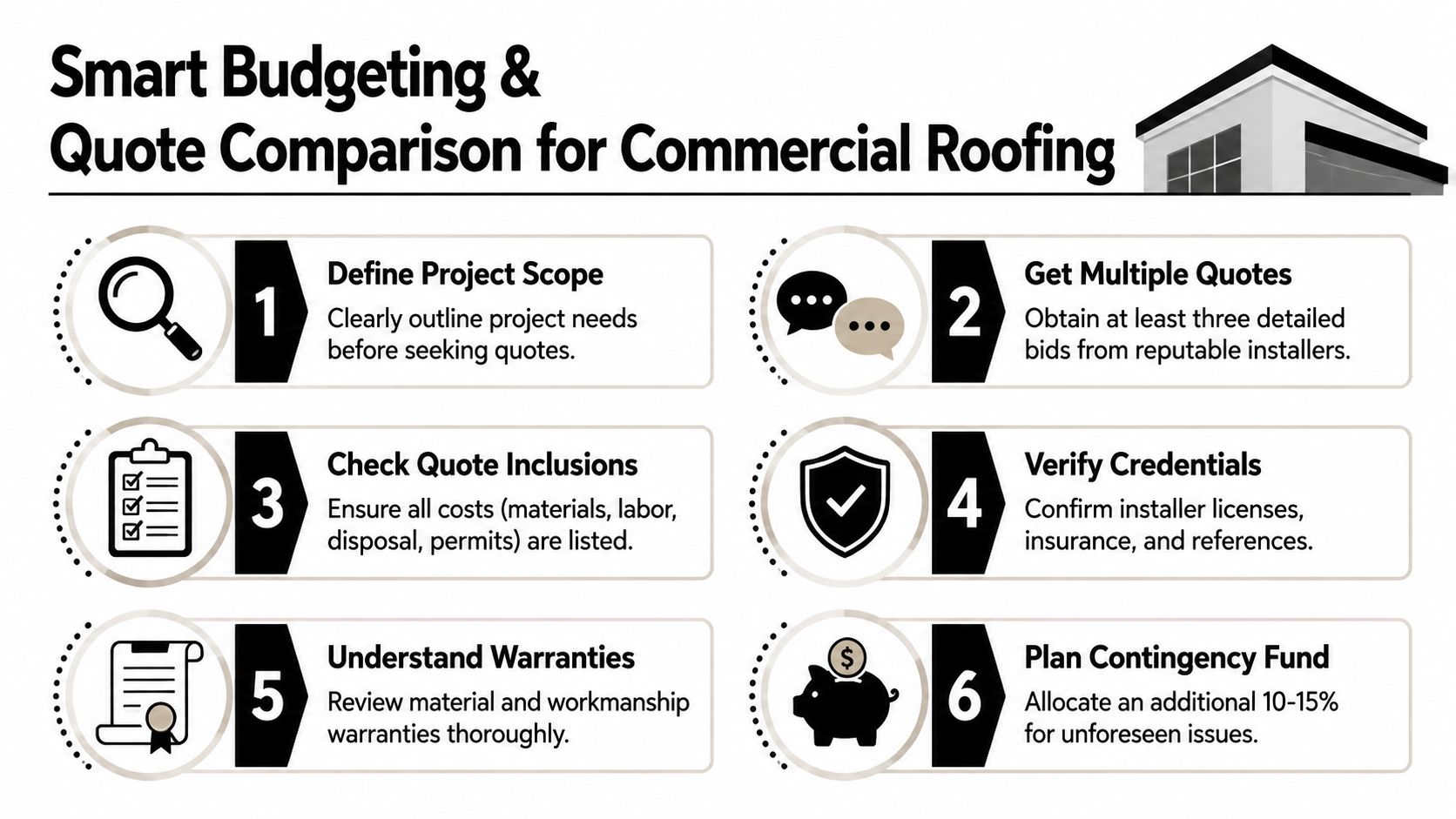
A strong brief should state the roof type, whether the site is occupied, any known leaks, any suspected hazardous material, access limits, preferred profile, finish expectations and whether the work must be staged. If you're not sure what an installation scope should include, this overview of roof installation planning and process helps clarify the moving parts.
What a proper commercial quote should show
A commercial roofing quote should be itemised enough that you can see where the money goes. It doesn't need to read like a legal document, but it should leave very little open to interpretation.
Look for these inclusions:
- Defined scope of demolition: What's being removed, and what isn't.
- Named roofing system: Profile, finish and any stated underlay or insulation.
- Access and safety allowances: Scaffolding, edge protection, lifting method or traffic controls if required.
- Waste and disposal detail: Especially important on older sites.
- Programme assumptions: Whether work is staged, after-hours or dependent on weather windows.
- Warranty wording: Material cover and installer workmanship should both be clear.
Red flags that usually lead to variations
A low number isn't the problem by itself. The problem is a low number with missing detail.
Here's what usually causes trouble:
- “Roof replacement” with no breakdown: That wording is too broad for a commercial site.
- No mention of compliance documents: On regulated sites, silence is a risk.
- Unclear exclusions: If asbestos, structural repairs or access equipment aren't mentioned, ask why.
- Generic material wording: “Metal roof” isn't enough. The profile and finish matter.
- No allowance for live site conditions: If your building is occupied and the quote ignores staging, expect friction later.
On quote reviews: If you can't compare two proposals line by line, you're not comparing price. You're comparing assumptions.
One practical approach works well. Put competing quotes into your own comparison sheet with the same headings: demolition, disposal, substrate prep, new roofing, access equipment, safety controls, programme, exclusions and warranty. That exposes the gap between a complete quote and a headline number very quickly.
Project Timelines Warranties and Calculating Long-Term ROI
Commercial owners often focus on the installed price and stop there. That's understandable, but it misses the business case. A roof isn't just a capital outlay. It affects maintenance demand, tenancy disruption, energy performance and how often you need to revisit the same problem.
Timelines and disruption planning
Project duration depends heavily on complexity, access and whether the building stays live during the works. A direct replacement on an uncomplicated site is usually more predictable than a staged project over active tenants, sensitive stock or regulated removal conditions.
The practical question isn't only “how long will it take?” It's “how will the work be sequenced so operations can keep moving?” Owners who ask for a staging plan early tend to manage disruption better than owners who focus only on the finish date.
A worthwhile timeline discussion should cover:
- Site setup requirements: Access zones, deliveries and waste movement.
- Weather exposure management: How openings will be controlled.
- Staging across occupied areas: Which sections are tackled first and why.
- Decision hold points: What happens if hidden substrate issues are found.
What value looks like after installation
Warranties matter, but they need to be understood correctly. Material warranties and workmanship warranties aren't the same thing. One relates to the roofing product supplied. The other relates to how the contractor installed the system and detailed the roof.
Long-term ROI usually comes from four places:
| Value driver | Why it matters |
|---|---|
| Lower maintenance burden | A well-detailed metal roof reduces recurring patch repairs and callouts |
| Improved thermal performance | Better roof systems can lower cooling demand on commercial buildings |
| Reduced operational disruption | Replacing a failing roof stops leaks from affecting stock, fitout or tenant use |
| Asset presentation | A clean, modern roof package supports property value and leasing appeal |
The owner who chooses on upfront rate alone often buys the wrong outcome. The stronger investment is usually the roof that suits the building, is installed properly, and won't need repeated remedial work because the cheap quote skipped critical parts of the system.
Making the Right Investment in Your Commercial Property
The complete Colorbond roof installation cost for a Sydney commercial property isn't found in a single square metre figure. It comes from the roof type, access, compliance burden, profile selection and how complete the scope is before work begins.
Cheap quotes often win attention because they look simple. Commercial roofing rarely is. The better approach is to price the whole job accurately, including demolition, safety, disposal, substrate preparation and the level of finish the building requires.
If you own or manage a warehouse, factory, strata complex or retail property, treat the roof as a long-term operating asset. A properly specified and properly installed system protects the building, reduces avoidable disruption and gives you a clearer maintenance future.
If you need a site-specific assessment for a warehouse, strata building, factory or commercial property in Sydney, Commercial Roofers can inspect the roof, identify key cost drivers and provide a clear quote that reflects the actual scope rather than a generic square metre allowance.