
A warehouse roof rarely gets approval for replacement on the first leak. It happens after stock has been moved three times, tenants have started complaining, and another storm turns a maintenance item into an operational problem. By then, the question is no longer whether the roof looks tired. The question is whether the building can keep trading while the risk keeps growing.
On commercial and industrial buildings in NSW, Colorbond roof installation is a building envelope project with compliance, structural, and safety consequences. The sheet profile and coating system matter, but the expensive mistakes usually sit elsewhere. I see them in missed structural checks, poorly scoped asbestos removal, incorrect sarking selection in bushfire-prone areas, weak penetration detailing, and handovers that leave the owner with no clear record of what was installed.
That is why a commercial reroof has to start with the building itself. Roof loads, existing purlin condition, fall, drainage paths, plant supports, access requirements, and staging all affect whether the new roof will perform properly and whether the work can proceed without disrupting the site more than necessary. Owners comparing options for commercial metal roofing in Australia need that broader view early, before the first quote is accepted.
Colorbond remains a sound choice for large roofs because it suits Australian conditions and is backed by established manufacturer systems. On a commercial asset, though, product choice is only the beginning. In NSW, the real difference between a roof that lasts and one that becomes a claim, a defect dispute, or a repeat spend usually comes down to due diligence before installation starts.
Table of Contents
- Investing in Your Asset A Commercial Roofing Overview
- Pre-Installation Planning and Due Diligence
- Budgeting for a Commercial Colorbond Roof
- The Professional Installation Process Explained
- Upholding Quality and Australian Standards
- Long-Term Maintenance and Warranty Protection
- Partnering for a Successful Roofing Project
Investing in Your Asset A Commercial Roofing Overview
A commercial roof replacement should be treated like any other capital works decision. It affects building performance, tenancy continuity, insurance exposure, maintenance forecasting and asset value. When owners treat it as a simple material swap, they usually underestimate the actual job in front of them.
On most commercial sites, the roof doesn't fail in one dramatic moment. It declines slowly. Fixings loosen. Old penetrations become vulnerable. Flashings fatigue. Water finds tiny weaknesses and starts damaging insulation, stock, electrical services or internal finishes. That ongoing disruption often costs more than people expect, even before replacement begins.
Colorbond is a common choice because it suits Australian commercial conditions, offers a clean finish and supports low-maintenance ownership when it's installed properly. But material alone doesn't protect the asset. The roof system has to be matched to the building, the site conditions and the compliance pathway. If you're weighing options, it helps to compare broader metal roofing systems used across Australia before locking in scope.
Practical rule: A commercial reroof isn't just buying steel. You're buying weather-tightness, compliance, safe access, structural certainty and fewer surprises over the next ownership cycle.
That's the lens worth using from day one.
Pre-Installation Planning and Due Diligence
A Sydney warehouse reroof can go off the rails before the first sheet arrives on site. The quote looks tidy, the programme looks achievable, then the strip-out starts and the building's inherent condition emerges: damaged purlins, undocumented plant supports, asbestos debris around penetrations, undersized gutters, or a bushfire compliance issue no one picked up at tender stage. On commercial and industrial projects in NSW, pre-installation planning is where you either control risk or pay for it later.
Start with the building, not the roof sheet
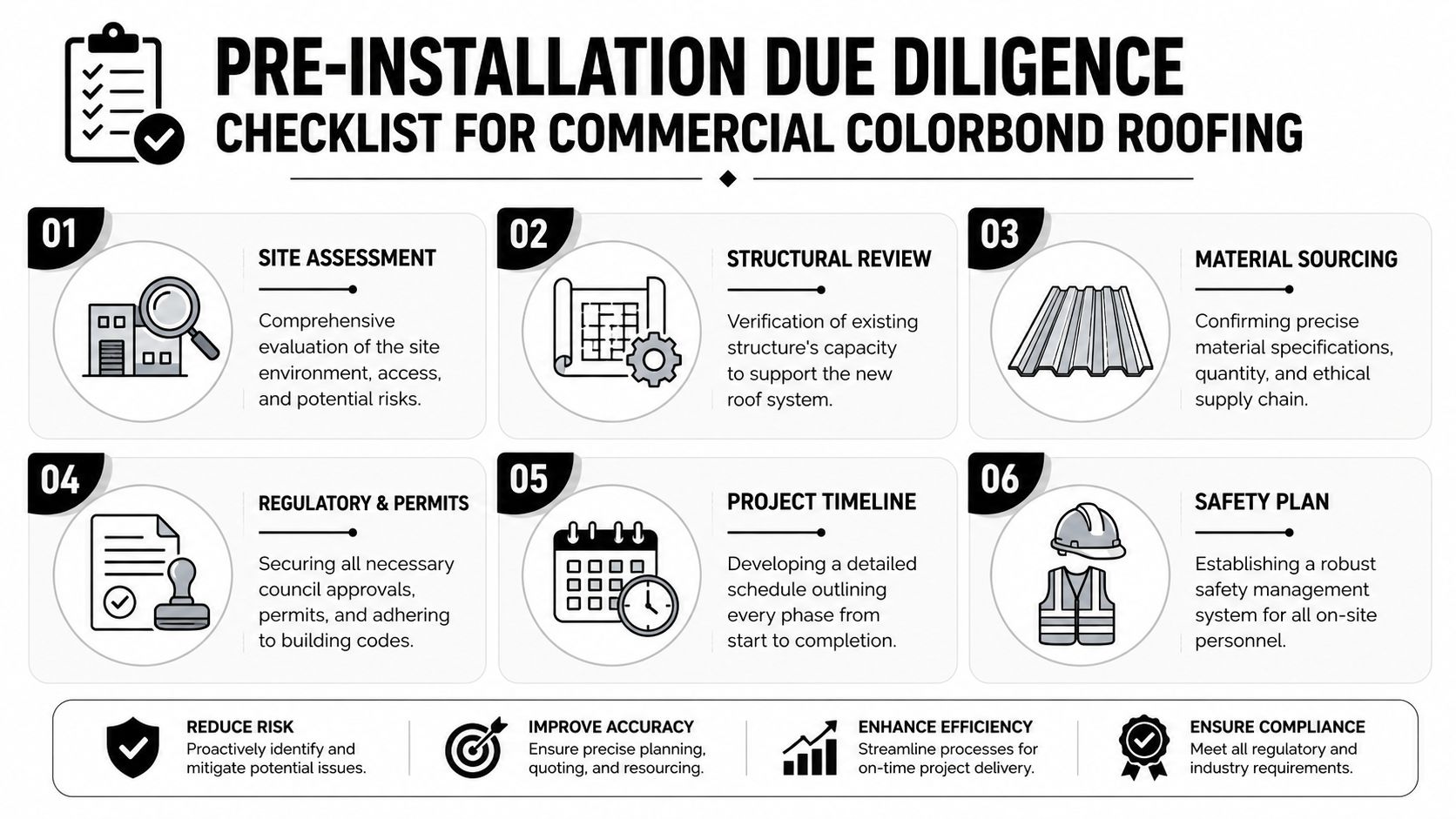
Due diligence has to cover the whole asset. I want the frame checked, purlin spacing confirmed, existing build-up identified, penetrations mapped, drainage reviewed, and roof access understood before procurement is locked in. A distribution centre, food plant and strata complex can all use Colorbond, but they do not carry the same structural demands, staging constraints or shutdown risks.
Before installation starts, these questions need clear answers:
- Structural capacity: Can the existing frame and purlins carry the proposed roof system, insulation, sarking, service loads and construction loads?
- Existing condition: Are supports straight, sound and worth building on, or do repairs need to happen before any new sheeting goes down?
- Services coordination: Where do HVAC units, vents, skylights, cable trays and fall-arrest lines sit, and who is isolating or modifying them?
- Water management: Are gutters, box gutters, sumps and downpipe locations adequate for the new roof layout?
- Access strategy: Will the site require cranes, scaffolding, EWPs, exclusion zones, tenant staging or weekend works?
Material selection also needs to match the site conditions, not just the budget line. Profile, coating class, sheet length, fixing pattern and rainwater compatibility all affect service life. If you're comparing substrates at specification stage, this guide on Zincalume versus Colorbond for roofing applications is useful background before engineering sign-off and procurement.
Asbestos changes scope, cost and programme
On older industrial sites across NSW, asbestos is often the issue that reshapes the whole project. Once asbestos-containing material is confirmed in roofing, flashings, underlays or adjacent components, the reroof becomes a licensed removal and clearance job before it becomes an installation job.
Property managers get caught when asbestos is treated as a possible variation instead of an early investigation item. That approach usually leads to programme slippage, emergency approvals, tenant disruption and disposal costs no one allowed for. The better path is to identify hazardous materials during due diligence, define the removal scope early, and build the sequence around legal clearance of the work area.
The practical effects are significant. Tenant notices may need to go out earlier. Access zones change. Waste handling becomes tightly controlled. Follow-on trades cannot enter until the area is cleared and documented properly.
If a contractor cannot explain asbestos sampling, licensed removal scope, disposal records and clearance sequencing in plain terms, they are not ready for an older NSW commercial reroof.
Bushfire compliance and sarking need to be resolved before the order is placed
In bushfire-prone parts of NSW, BAL requirements can affect the roof build-up, the sarking specification, sheet detailing and penetration treatment. Generic DIY advice misses this point because it rarely deals with commercial roof geometry, large plant penetrations, or the interaction between fire compliance and condensation control.
Sarking has to be specified as part of the system. It affects ember resistance, moisture management, thermal performance and the way the roof assembly breathes over time. Poor detailing at laps, unsupported sections, incompatible materials or incorrect air gaps can trap moisture under the sheets and create corrosion from the underside. I have seen new steel look fine from above while the concealed details were already setting up future failure.
That review should happen before final ordering. Once materials are on site, redesign gets expensive.
A sound due diligence file for a commercial reroof in NSW should include:
| Item | Why it matters |
|---|---|
| Existing roof investigation | Confirms what is being removed and what must stay in place |
| Structural review | Checks the support system before new loads are introduced |
| Hazardous materials review | Identifies asbestos and other regulated materials early |
| Fire and bushfire compliance review | Prevents redesign after procurement |
| Services coordination | Avoids clashes at penetrations and plant areas |
| Access and staging plan | Keeps the building operating safely during works |
Good planning shortens the installation phase, reduces variation claims and protects the asset from problems that should have been found before the first delivery truck booked in.
Budgeting for a Commercial Colorbond Roof
A commercial reroof usually blows out for one reason. The budget was built around a square metre rate, then the actual site conditions showed up after contracts were signed.
On a warehouse, factory, school or strata complex in NSW, the sheet metal is only one part of the spend. Access, staging, demolition, asbestos controls, flashing details, live services, weather protection and certification can change the number fast. If the building must keep operating during works, the programme itself becomes a cost item.
What the square metre rate actually tells you
Benchmark rates still have a use. They help an owner or property manager spot a quote that is obviously light or inflated. They do not tell you what a commercial reroof will cost once you add plant penetrations, box gutters, edge protection, crane time, out-of-hours work, temporary weatherproofing and regulated waste.
That gap matters on older industrial assets. A low rate can look attractive at tender stage, then collapse once the contractor opens up the roof and finds deteriorated supports, non-compliant details or concealed hazardous materials.
For a more relevant pricing guide, this breakdown of commercial Colorbond roof installation cost factors is a better starting point than a generic residential reroof article.
Where commercial roofing budgets usually move
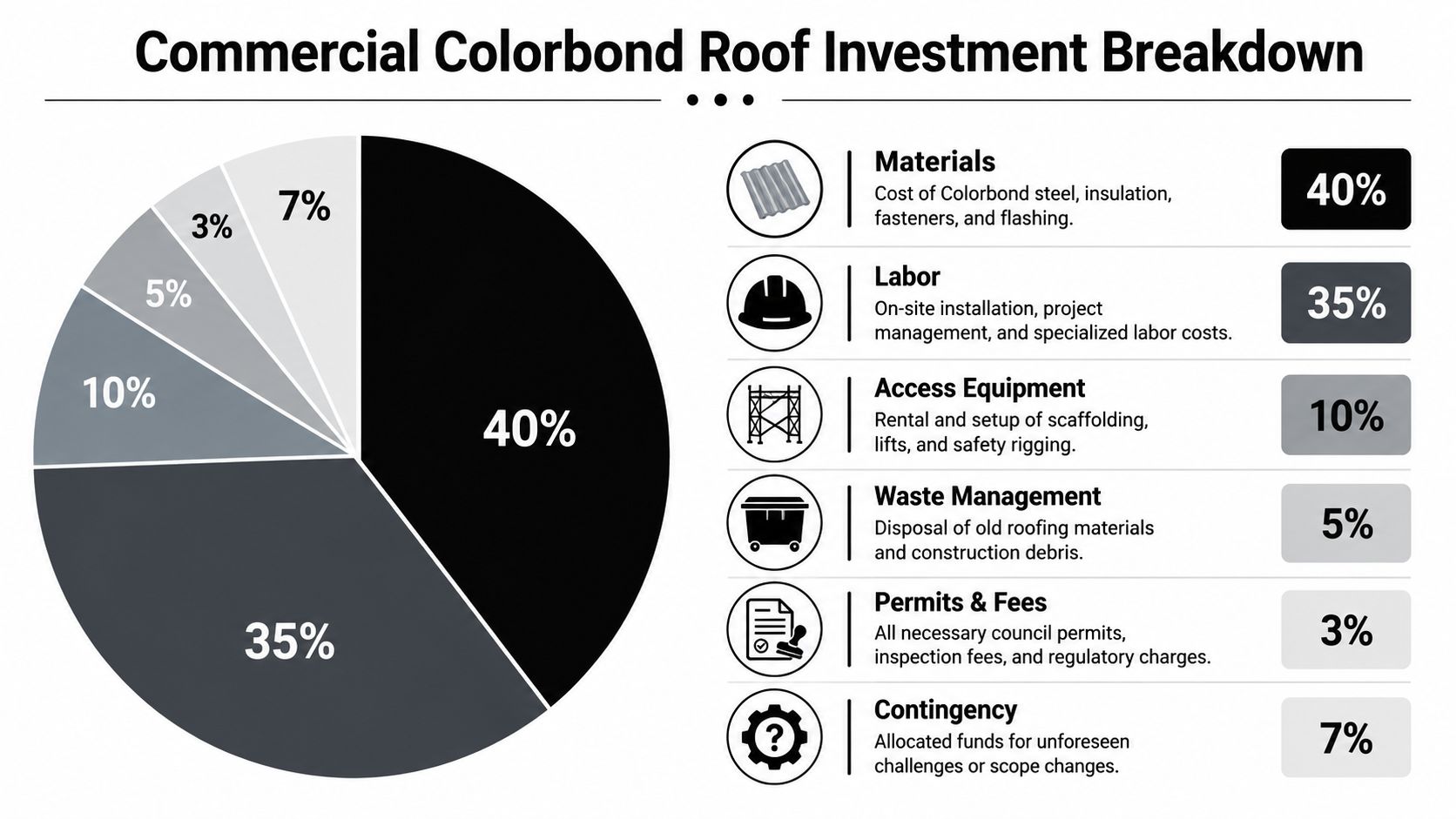
I price commercial Colorbond work in risk categories, not as one blended rate. That shows where variations are likely to start.
- Roof build-up: Sheet profile, coating selection, insulation, BAL-rated sarking, acoustic blanket and custom flashings all affect supply cost and installation time.
- Access and site safety: Scaffolds, cranes, aerial work platforms, static lines, exclusion zones and traffic management can be a major part of the job on tall or occupied sites.
- Removal and disposal: Strip-out costs rise quickly where the existing roof includes asbestos-containing materials, fragile skylights or wet insulation that must be handled and disposed of correctly.
- Penetrations and roof details: HVAC units, pipework, cable trays, parapets, box gutters, sumps, overflows and expansion joints take time to detail properly. Shortcuts here are where many leaks begin.
- Structural rectification: If purlins are corroded, deflected or inadequately fixed, the new roof package may trigger steel repairs before installation can continue.
- Programme constraints: Night works, weekend shutdowns, staged handovers and keeping tenants operational all add labour, supervision and temporary protection costs.
The line items owners often miss
Two items get left out of early budgets more than anything else in NSW. The first is asbestos management. The second is compliance-driven upgrades that only appear once the design is reviewed properly.
If asbestos is present, budgeting has to cover licensed removal, air monitoring where required, regulated transport, disposal, site isolation and the downtime that comes with controlled removal. Treating asbestos as a provisional afterthought is how jobs stall.
Fire and condensation control can also shift the number. BAL-rated sarking, compliant laps and tape systems, compatible materials, and revised details around roof penetrations are not optional extras where the design requires them. They are part of building the roof system properly.
A better way to compare quotes
A commercial roofing quote should show scope in plain language. If two prices are far apart, the useful question is what has been included, excluded or left vague.
Look for these quote markers:
| Quote item | What you want to see |
|---|---|
| Removal scope | Exact description of what is being removed, including hazardous material assumptions |
| New roof build-up | Sheeting profile, coating class, insulation, sarking, flashings and rainwater goods |
| Structural allowance | Whether purlin repairs, tie-down upgrades or substrate rectification are included or excluded |
| Access method | Scaffolding, cranes, EWPs, edge protection and site isolation requirements |
| Penetrations and details | Flashing and sealing around plant, services, skylights and gutters |
| Compliance pathway | SWMS, permits, inspections, asbestos controls where relevant, and required certification |
| Handover | Clean-up, defects period, warranties, as-builts and maintenance information |
The cheapest quote on paper often becomes the most expensive roof in service. I have seen owners save money at tender stage, then spend far more on structural variations, leak callbacks, corrosion repairs and tenant disruption because the original scope was missing the hard parts.
The Professional Installation Process Explained
A commercial Colorbond roof can fail before the first sheet is fixed. I have seen jobs in Sydney where the program looked fine on paper, then stalled because the old roof contained asbestos, the purlins were out of tolerance, or the specified sarking did not match the building's BAL or condensation requirements. On a warehouse, school, factory or strata complex, installation is really a controlled sequence of risk reduction.
What should happen before the first sheet goes on
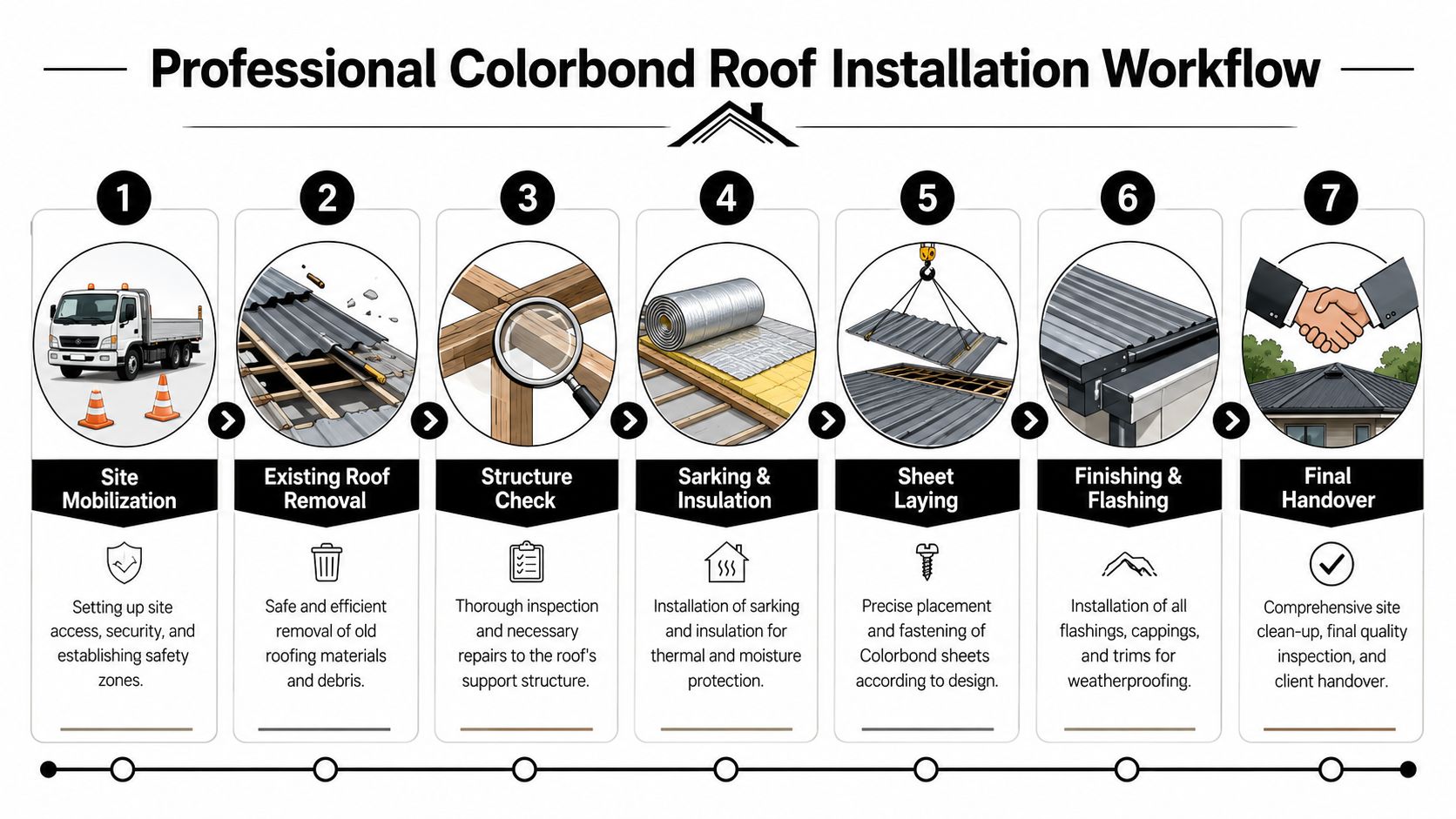
The first stage is site establishment and isolation. Access points, exclusion zones, edge protection, lifting areas and material laydown all need to be set before demolition starts. On occupied sites, the workfront also needs to be coordinated with tenants, plant shutdowns, wet weather planning and any areas that cannot be exposed during business hours.
If the existing roof is older fibro or there is any doubt about its composition, asbestos assumptions need to be resolved before removal. That means testing, licensed removal where required, waste tracking, and a method that keeps the building and surrounding areas safe. Generic residential advice misses this point. In NSW commercial work, it can dictate the whole program.
Removal should then happen in manageable sections that can be made watertight the same day. Large open strip-outs save time only until the weather turns or internal operations are damaged. On industrial sites with stock, machinery or electrical services below, disciplined staging is usually the difference between a roof replacement and an insurance claim.
Before new materials go down, the support structure gets checked in the open. That includes purlin condition, spacing, straightness, tie-down points, corrosion at fixings, and any distortion around roof penetrations or old plant supports. New sheeting will not correct a bad frame. It will only hide it until the first heavy storm or service call.
A useful client-side explainer sits below. It gives a basic visual overview of roof installation stages.
How the roof is laid and sealed properly
Once the substrate is accepted, the crew installs the layers that sit under the roof skin. Depending on the specification, that may include safety mesh, insulation blanket, anticon systems, or sarking selected for bushfire and moisture performance. On NSW projects near bushland, BAL-rated sarking is not a box-ticking item. If the wrong product is installed, or laps and penetrations are handled badly, you can end up with a roof that looks finished but does not meet the design intent.
Set-out matters just as much as materials. Sheets need to start square, runs need to stay true, and laps need to remain consistent across the roof area. On long commercial runs, a small error at the start can throw flashings, ridges, gutters and penetrations out by a long way by the end of the day.
Low-pitch work needs extra discipline. As noted earlier in the article, end laps and sheet turn-ups have to suit the roof pitch and profile so water sheds properly under wind-driven rain. This is one of the first places I check on industrial replacements, because the consequences usually show up inside the building, not on top of it.
The details that stop early failure
Most leak paths start at changes in direction and interruptions in the roof plane. Penetrations for mechanical services, flues, vents, conduits, skylights and sprinkler work need purpose-made flashings, compatible materials and enough clearance for movement and maintenance access. A bead of sealant around an awkward penetration is a temporary patch, not a commercial roof detail.
Cleanliness on site matters more than many owners realise. Metal swarf from cutting and drilling, loose rivet shanks, offcuts and packaging left in pans or gutters will start corrosion and block drainage. A roof can present well at handover and still carry the debris that shortens its service life.
I also look hard at interfaces with existing elements that remain in place. Gutters, box gutters, downpipes, parapets, rainhead overflows and older wall cladding all have to work with the new roof system. A new Colorbond roof discharging into failed drainage, or terminating badly against an old parapet, will still leak.
On larger NSW commercial projects, a contractor such as Commercial Roofers may be engaged for asbestos roof removal and replacement, industrial roof replacement, and inspection reporting under one scope. The value in that arrangement is not marketing. It is tighter control over sequencing, responsibility and defect tracing at handover.
Upholding Quality and Australian Standards
A commercial Colorbond roof can look tidy on day one and still fail inspection where it counts. I see that on older industrial sites across NSW, especially where owners inherited a building and assume a new roof package means every compliance issue has been dealt with. It often has not. The expensive mistakes usually sit under the sheets, around penetrations, or in paperwork that was never completed properly.
What a client should inspect during works
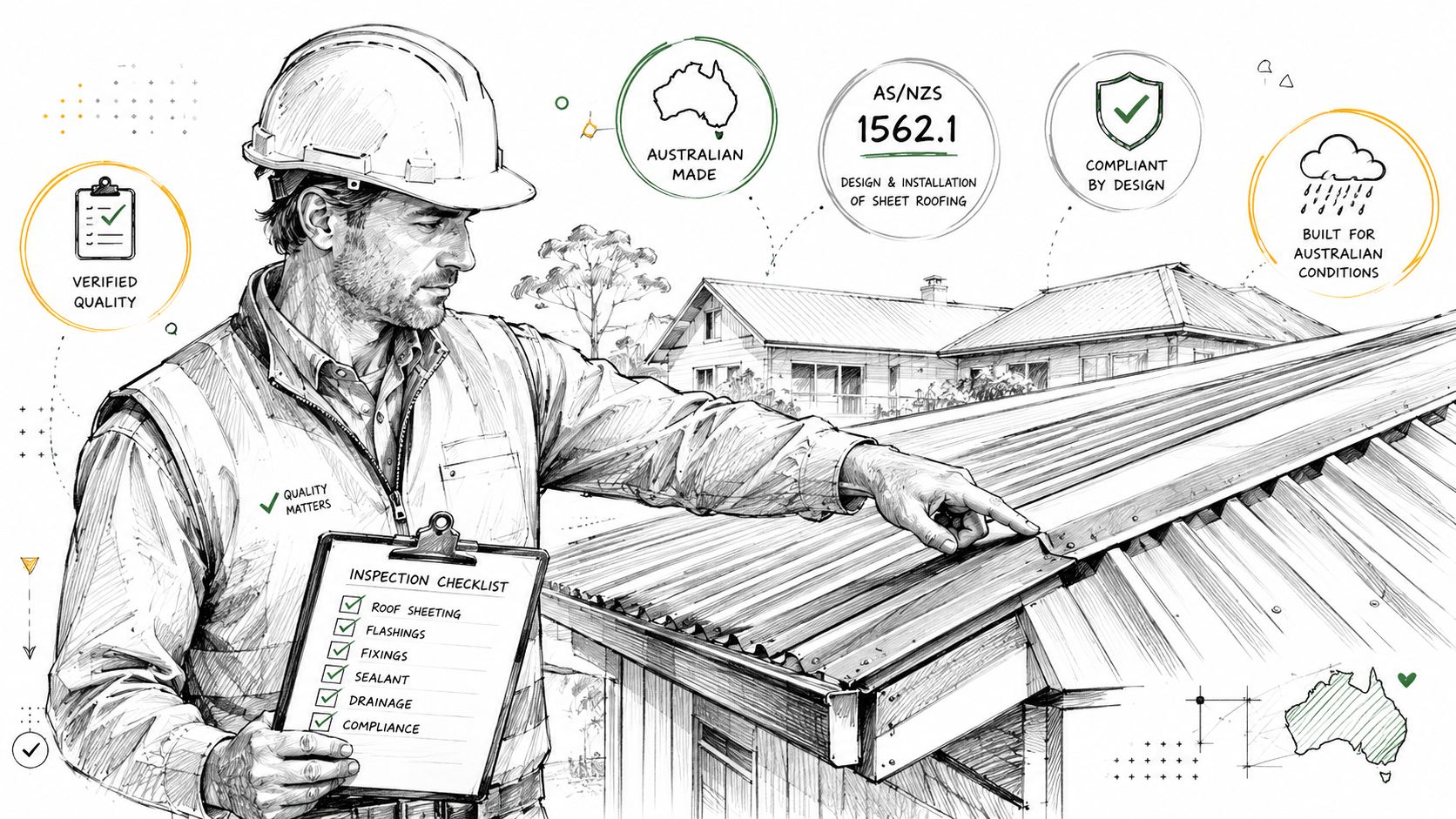
Owners and property managers do not need to stand over installers. They do need a clear checklist. On commercial and industrial work, quality control is about proving the roof system matches the site conditions, the approved design, and the relevant Australian Standards and NCC requirements.
Start with the items that are hard to correct later. If the project involves a roof-over or replacement on an older NSW building, confirm whether asbestos has been identified, removed and cleared under the correct process before new work proceeds. If the site is in a bushfire-prone area, check that the specified sarking and detailing match the required BAL rating rather than relying on a generic insulation blanket. If structural repairs were noted during pre-start inspections, ask to see what was rectified before sheets covered the frame.
Then inspect what is visible on the roof:
- Consistent fastener installation: Fasteners should be aligned, correctly seated, and suited to the supporting structure and exposure conditions.
- Undamaged materials before fixing: Sheets, flashings and fasteners should go up clean and free from dents, coating damage, and avoidable scratches.
- Accurate flashing details: Penetrations, parapets, ridges, gutters and change-of-pitch areas should be properly formed, not patched with excess sealant.
- Correct safety and approval pathway: Confirm the contractor is working under the right approvals, licences, and site-specific safe work procedures.
- Clean work areas: Swarf, offcuts, loose rivets and packaging should be removed as work progresses, not left for the end.
One practical rule helps here. If a contractor is reluctant to show hidden-stage photos, substrate repairs, sarking installation, or framing rectification, that is a warning sign.
Site check: Ask for progress photos before cover-up points, especially after asbestos removal, structural repairs, sarking installation, and complex flashing work around plant and services.
What proper handover looks like
Handover on a commercial roof is an asset record, not a quick walk around with a supervisor. The owner should receive enough information to verify compliance, support warranty claims, and manage future service work without damaging the roof.
At minimum, owners should expect:
| Handover item | Why it matters |
|---|---|
| Completion inspection | Confirms the installed roof matches the agreed scope and is weather-tight at practical completion |
| Compliance documents | Supports building records, insurer queries, and future capital works planning |
| Warranty information | Clarifies the difference between product warranties and workmanship responsibility |
| Maintenance guidance | Sets out cleaning, access and inspection requirements that protect service life |
| Photos or marked-up records | Helps future trades locate structure, services and approved penetration points |
I also expect clear records where the job involved asbestos removal, structural steel repair, or fire and bushfire compliance measures. Those items affect more than the roof package itself. They can affect occupancy, insurance, future approvals and liability if something goes wrong later.
Australian Standards and the NCC set the minimum acceptable path. On a large warehouse, factory, school or strata complex, minimum standard still demands careful execution. If drainage is wrong, if BAL-rated components are substituted, or if the supporting structure was never checked properly, the roof may be new but the risk is still sitting over your tenancy.
Long-Term Maintenance and Warranty Protection
A new Colorbond roof doesn't need constant intervention, but it does need attention. Most major repair bills start as small maintenance items that nobody picked up early. Gutters hold debris. A service trade damages a flashing. A minor penetration alteration isn't sealed properly. Months later, the owner is chasing an internal leak and trying to work out whether it's covered by warranty.
What to put into your maintenance routine
The most effective maintenance plans are simple enough to be implemented. For commercial and industrial buildings, that usually means scheduled visual inspections, cleaning and a clear rule about who can access the roof.
A practical routine should include:
- Gutter and valley cleaning: Remove leaves, dirt and roof debris before drainage is restricted.
- Visual roof checks: Look for loose flashings, debris build-up, impact damage and signs of surface contamination.
- Penetration review: Pay attention after any HVAC, electrical, fire or communications contractor has worked on the roof.
- Gentle washing where needed: In coastal or industrial environments, washing down can help remove deposits that sit on the surface over time.
- Record keeping: Keep maintenance notes, photos and invoices. They help if a warranty question comes up later.
For larger sites, I prefer a set maintenance register tied to the asset file. That way, when management changes or a new facility manager takes over, the roof history doesn't disappear.
How owners accidentally weaken warranty protection
Owners often assume a warranty means any roof issue will be fixed without argument. It doesn't work like that. Material warranties and workmanship warranties are separate. The steel manufacturer covers the product under its terms. The installer covers the quality of installation under theirs. If another trade penetrates the roof badly or maintenance has been ignored, those distinctions matter.
What usually causes trouble is undocumented post-installation work. Solar installers, mechanical contractors and access system trades can all affect a roof if they don't coordinate correctly with the roofing system. Once that happens, it becomes harder to pin responsibility down.
The safest approach is straightforward:
- Control roof access. Don't let every contractor treat the roof as open space.
- Require approval for penetrations. Every new opening should be documented and weathered properly.
- Use the maintenance guidance provided at handover. If the installer says debris must be cleared and the owner ignores it, that's a preventable dispute.
- Act on small defects early. A loose flashing or blocked gutter is a minor service issue until it's left through a storm season.
Keep one roof file with drawings, warranties, approvals, maintenance records and photos. That single habit solves a lot of avoidable disputes later.
Partnering for a Successful Roofing Project
A successful commercial Colorbond roof installation in NSW comes down to disciplined decisions at the start and disciplined workmanship on site. Owners who treat the roof as a strategic building system usually get better outcomes than owners who shop only on a lump sum price.
The big issues are rarely mysterious. Check the structure before ordering steel. Identify asbestos before programme and budget are locked. Get the fire and sarking details right in bushfire-prone areas. Make sure access, staging and live-site operations are built into the method. During installation, watch the quality markers that matter. Substrate prep, penetration detailing, flashing work, clean-up and documentation.
After handover, keep the roof on a maintenance schedule and control who touches it. That's how a new roof stays an asset instead of becoming another recurring problem line in the budget.
For business owners, developers and strata managers, the right contractor is one who can manage the full chain of responsibility. Investigation, safe removal where needed, compliant installation, coordination with other trades, and clean handover all need to sit inside one controlled process. That's especially true on occupied warehouses, industrial facilities and multi-tenant commercial properties where disruption carries real cost.
If you're planning a commercial reroof, replacing an ageing warehouse roof, or dealing with asbestos and compliance issues on an NSW asset, Commercial Roofers can assess the site, define the scope and provide a detailed quote for a compliant Colorbond roofing project.