
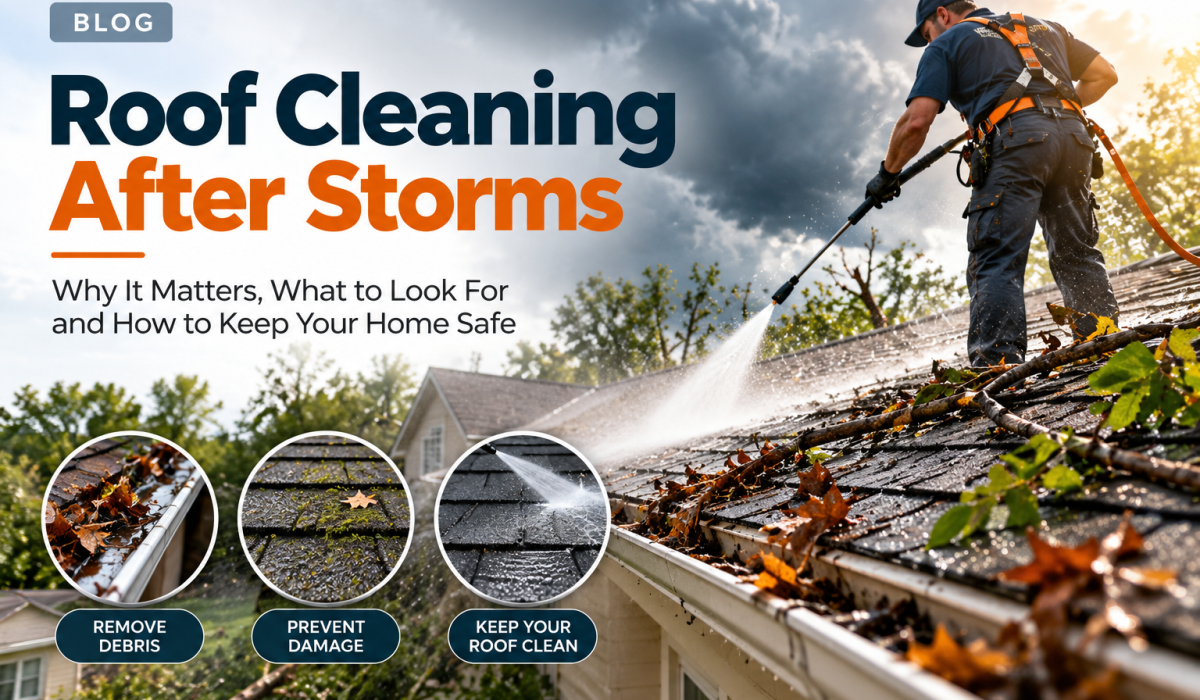
There could be scattered branches, leaves, debris, and dirt that can damage your roof and result in costly repairs. Your roof condition may worsen if it is not cleaned up properly on time after a storm. This detailed guide equips you with everything you need to know about roof cleaning after storms and severe weather.
- Inspect Your Roof Safely After a Storm
Inspect your roof thoroughly from the ground and look for loose metal sheets, cracked, broken, or missing tiles, or fallen branches. You can use binoculars to look for small damages, because small damages can turn into bigger issues over time.
- Remove Leaves, Branches, and Loose Debris
Find a safe position for yourself first and then start removing twigs, leaves, and branches with appropriate tools. Make sure you don’t step on fragile areas or loose metal sheets while removing the leaves or debris as you can fall and sustain serious injuries.
- Check Gutters and Downpipes for Blockages
Leaves and branches may block downpipes and gutters, and the accumulated rainwater may leave marks on walls and weaken the roofing materials around roof edges. This is why you need to make sure that water is flowing freely through downpipes.
- Identify Roof Damage Before Cleaning
Don’t begin the cleaning process without first identifying the exact damage caused by the storm. This is mainly because it is not appropriate to clean up the damaged roof without proper understanding of underlying issues.
- Prevent Moss, Algae, and Mould Growth
Shaded areas are more likely to develop algae, moss, or other organic growth, and these growths can cause serious damage to the roofing materials if not handled properly.
- Protect Your Property During Roof Cleaning
Falling debris can enter your property or garden, and this is why you need to protect your outdoor furniture and plants. Also, make sure that while you are engaged in the cleaning process, your children or pet(s) are roaming on the surrounding ground area.
- Document Damage and Contact Your Insurer
If you have an active insurance, you must first take videos or photographs from a safe position. Next, understand your policy’s requirements by contacting your insurance provider. Let the insurer inspect the damage before you make any repairs.
- Schedule Regular Roof Maintenance
Make sure you engage in regular roof maintenance by inspecting your roof thoroughly after storms. There could be blocked gutters, loose tiles, damaged flashing, or marks of water penetration. You must not ignore any of these signs, because even minor issues can turn into costly repairs if they are not managed properly on time.
Common Types of Storm Damage
Cracked or missing tiles: Rainwater may find its way to underlying roof structure through cracked or broken tiles. Thus, you need to reposition looses tiles and replace cracked or broken ones.
Loose metal sheets: Severe storms can loosen the screws or fasteners that attach metal sheets tightly, and affected sections need to be fixed with appropriate tools.
Damaged flashing: Storms can also damage the flashing around vents, chimneys, and roof joints, which may result in rainwater entering the ceiling and overflowing onto walls.
Water penetration: Water penetration can cause other serious roofing issues, and it is important to repair leaks before cleaning up the roof.
Choose the Right Roof Cleaning Method
Soft Washing: In the soft washing process, moss, dirt, or algae is removed with low water pressure.
Low-Pressure Cleaning: Use controlled flow of water to clean up the debris from your roof and make sure that you don’t direct water under metal sheets or tiles.
Manual Debris Removal: You can remove twigs, leaves, or debris manually with a soft brush but make sure you don’t climb onto slippery or uneven surface.
Important: Make sure you don’t clean up your roof during extreme weather conditions and use unnecessary pressure of water to clean up the surface.
Conclusion
Property owners must choose standing seam cladding because it protects the roof structure from rainwater or other harsh weather conditions. Plus, as it consists of metal panels, it can be cleaned more easily than traditional cladding materials and does not require frequent maintenance. Besides this, as there are fluctuations in temperature because of harsh weather in Sydney, standing seam cladding allows expansion and contraction of metal naturally. Most importantly, fasteners are properly concealed and panels are installed in a way that gives evenly vertical lines on the surface, which gives exterior a modern and finishing touch. These are the main reasons why standing seam cladding is becoming a popular option among property owners.
Should I clean my roof immediately after a storm?
No, you don’t need to clean your roof immediately after a storm because it can be dangerous. Clean your roof only during clean weather and make sure you’ve identified and evaluated the exact damage before engaging in the cleaning process.
Can I pressure wash my roof after a storm?
High water pressure can damage tiles and direct water under metal sheets or tiles, which may result in more serious damage.
Does roof cleaning prevent leaks?
Many drainage problems can be resolved with regular cleaning, because blocked gutters and debris are the two major reasons behind drainage problems.
When should I call a professional?
If you have extensive leaks that you can’t fix on your own or serious structural damage that has weakened your roof, you need to contact a professional to handle the situation.