
You've arrived at your Sydney warehouse before the staff, expecting an ordinary trading day. Instead, there's water near stored stock, a ceiling mark above a loading area and a contractor asking whether the roof contains asbestos. The immediate leak is visible, but the difficult decisions are underneath it: can the roof be repaired safely, does the building need staged replacement, what access controls are required, and which costs belong in the original scope?
Commercial roofing in Sydney is rarely just a choice between sheets, membranes and labour. Older industrial buildings, occupied sites, drainage design, corrosion exposure, asbestos controls and workplace safety obligations all affect the result. A low repair price can become expensive if it causes shutdowns, repeat call-outs or uncontrolled hazardous-material work.
Table of Contents
- Introduction to Commercial Roofing in Sydney
- Understanding Commercial Roof Types
- Managing Colorbond and Asbestos Roof Replacement
- Navigating Roof Replacement Process
- Calculating Cost Drivers and Budgeting
- Meeting Compliance and Warranty Requirements
- Selecting the Right Commercial Roofing Contractor
- Common FAQs for Commercial Roofing in Sydney
Introduction to Commercial Roofing in Sydney
A Sydney business owner may only notice the commercial roof when it disrupts work. Water reaches stored stock, a blocked box gutter causes internal damage, or a corroded sheet turns the next storm into a deadline. The right response requires more than a ladder and a patch. It starts with a condition assessment, a safe work sequence and a scope suited to the building's age, occupancy and daily operations.
Sydney's east-coast rainfall can quickly expose failed laps, flashings, fasteners and drainage points. Flat and low-pitch roofs require careful attention because water depends on designed falls, clear outlets and maintained drainage paths. Roof performance therefore supports business continuity, alongside the building's structure and services.
Compliance can also create costs that are easy to miss in an initial quote. An older roof may require asbestos identification before work proceeds, controlled access while trades are present, and planned handling and disposal of contaminated materials. The NSW asbestos program records 50,451 tonnes of asbestos damaged by the 2019–20 bushfires and 1,757 tonnes of flood-affected asbestos waste removed under levy exemption from March 2021 onward. These figures are reported in the NSW asbestos safety social research report, showing why asbestos capability remains relevant to commercial roofing.
Practical rule: Include testing, access arrangements, safety controls and waste handling in the project from the first inspection, rather than treating them as demolition-stage surprises.
A planned assessment lets owners, developers and strata managers compare repair, restoration and replacement using the same practical information. It also helps separate tenants, warehouse staff, vehicles and visitors from roof work while the project is underway.
Understanding Commercial Roof Types
The right roof depends on the building beneath it. A warehouse with long spans and plant equipment needs a different approach from a retail centre, healthcare facility or strata property with occupied areas and architectural constraints.
Metal deck systems
Corrugated, trimdek and clip-lock profiles are common across Sydney's industrial and commercial stock. They use formed metal sheets fixed to a supporting structure, with laps, fasteners, flashings, cappings and penetrations all contributing to weatherproofing.
Metal roofing is a regulated construction system. The National Construction Code requires metal roof cladding to comply with AS 1562.1 and to receive corrosion protection in line with NCC Table 3.5.1.1a, as set out in the Australian roofing and wall cladding guidance. That requirement affects material selection, fixing compatibility and detailing, especially in exposed or corrosive environments.
Colorbond and Zincalume are familiar options, but the finish, base metal, environment and installation quality all matter. A roof near industrial emissions, coastal air or aggressive pollutants may need more careful corrosion planning than a sheltered inland site.
Built-up and membrane roofs
Built-up systems combine layers such as insulation, reinforcing components and waterproofing materials. Membranes may use systems such as modified bitumen, PVC or other synthetic products. These roofs suit low-slope commercial buildings where sheet profiles aren't appropriate, but seams, penetrations, surface damage and drainage require disciplined maintenance.
A membrane roof can work well over offices, retail areas and flat warehouse sections. It won't compensate for poor falls or blocked outlets. If the substrate moves, insulation becomes wet or ponding develops, the contractor needs to investigate the cause rather than apply another coating.
Tiles, slate and green roof solutions
Tile and slate profiles appear more often on heritage, residential-commercial and design-led properties than on large warehouses. They can support a building's visual character, but repairs require attention to broken units, underlays, flashings and structural loading.
Green roofs add planting and drainage layers above the waterproofing system. They can support an energy and amenity strategy, but they need structural review, root protection, irrigation planning and ongoing horticultural maintenance. They aren't a simple replacement for a conventional roof.
| Roof Type | Material | Typical Lifespan | Approximate Cost | Use Cases |
|---|---|---|---|---|
| Metal deck | Corrugated, trimdek or clip-lock metal | Depends on coating, exposure and maintenance | Varies with profile, access and detailing | Warehouses, factories and logistics buildings |
| Built-up system | Layered waterproofing and insulation | Depends on membrane condition and maintenance | Varies with layers and substrate preparation | Low-slope commercial roofs |
| Membrane | Synthetic or bituminous waterproofing | Depends on seams, penetrations and drainage | Varies with membrane specification and access | Retail, office and industrial sections |
| Tile or slate | Clay, concrete or natural slate units | Depends on units, underlay and flashings | Varies with heritage and access requirements | Heritage and design-led properties |
| Green roof | Waterproofing, protection, drainage and planting layers | Depends on waterproofing and maintenance | Varies with structure and landscaping scope | Selected amenity and sustainability projects |
Managing Colorbond and Asbestos Roof Replacement
A warehouse may need a new roof before its occupants notice anything from ground level. Colorbond replacement and asbestos removal can look similar from below, yet their controls, costs and legal duties differ. Colorbond planning centres on sheet condition, profile, corrosion, fasteners, flashings, insulation, access and material compatibility. Asbestos work begins with identification and risk control before the roof is disturbed.
Colorbond planning
Inspect the existing sheets, supporting members, penetrations, gutters and edge details. The scope should name the proposed profile, coating, insulation, fixings, flashings, cappings, access method and disposal route. If the building stays occupied, separate roof removal from staff, customers, stock and vehicle movements.
Owners comparing finishes can use this Zincalume versus Colorbond guide to frame questions about appearance, exposure and suitability. The final selection must still suit the building design, corrosion environment and manufacturer requirements. A cheaper-looking specification can create later costs if its coating or fixings do not suit the site.
Asbestos identification and removal
Older commercial properties require careful investigation. Suspected asbestos should not be drilled, cut, swept or pressure-cleaned like ordinary sheet metal. Testing and records should come before intrusive work. The team also needs a documented method for isolating, removing, transporting and disposing of the material.
NSW requires a licensed asbestos removalist for bonded asbestos above 10 m². Friable asbestos requires a Class A licence, according to the SafeWork NSW asbestos removal code. The limited exception for small quantities of non-friable asbestos still requires safe work planning.
Site reality: An asbestos replacement affects business coordination as well as roofing. Containment, exclusion zones, waste transport, neighbour communication and access restrictions may change daily operations.
Separate licensed removal from new-roof installation in the written scope. State who arranges testing, controls the work area, records waste and manages weather interruptions. Confirm when installation can begin after removal. Treating asbestos as a provisional note at the bottom of a quote can hide the compliance work and costs that determine the actual project budget.
Navigating Roof Replacement Process
Roof replacement works best when each decision is made before the next trade arrives. A contractor can't produce a reliable installation sequence if the owner hasn't confirmed occupancy requirements, asbestos status, access limitations or drainage expectations.
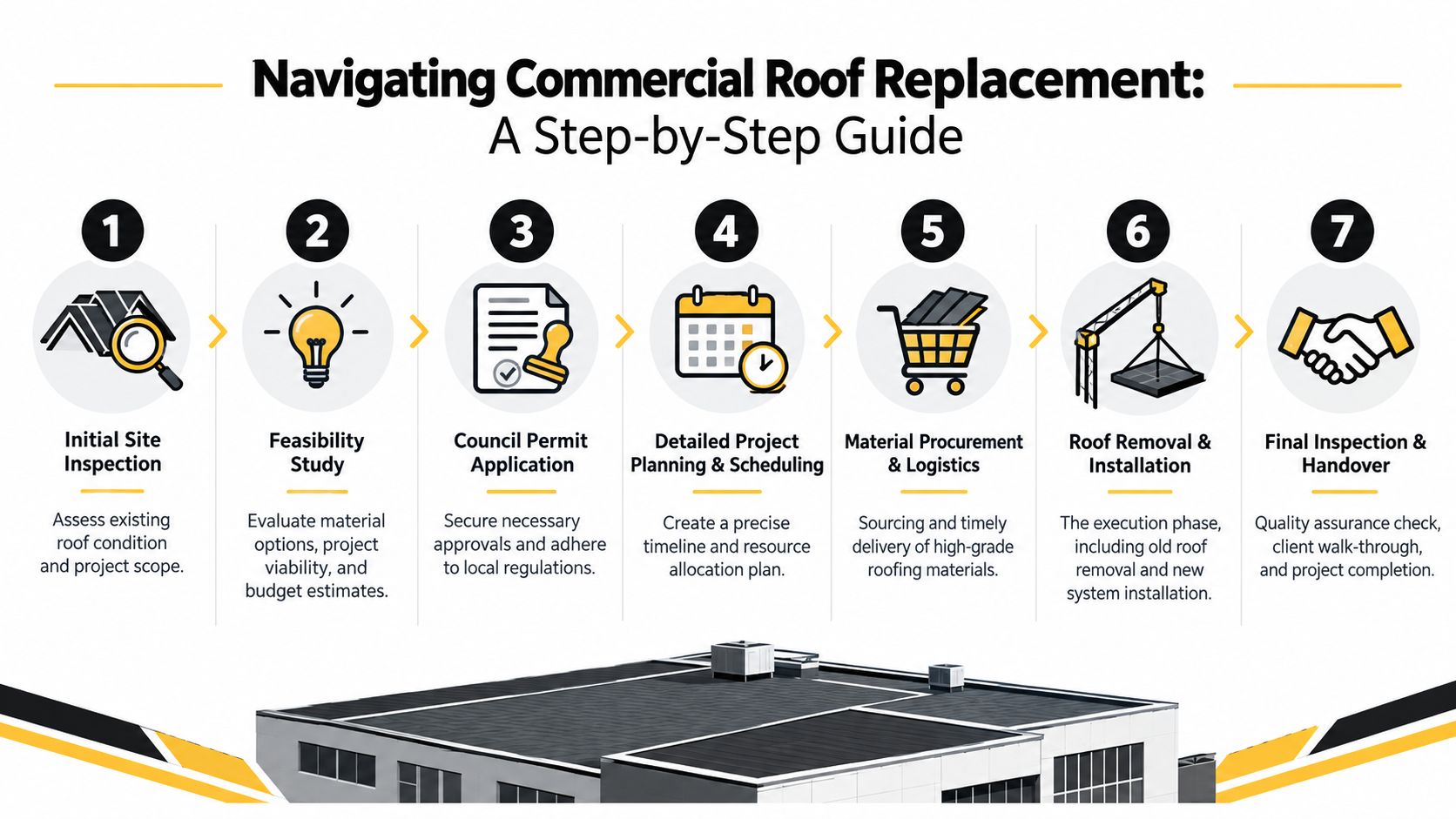
Start with the building, not the quote
1. Inspect the roof and interior. The assessment should cover sheets or membranes, flashings, penetrations, gutters, box gutters, outlets, insulation, ceiling evidence and accessible structural elements. Internal water marks can help locate a problem, but the visible mark isn't always the entry point.
2. Establish feasibility. Compare repair, restoration, partial replacement and full replacement. Check whether the existing structure can support the proposed system, whether access equipment can reach the work area and whether the business can operate below the works.
3. Confirm hazardous materials. Review existing records and arrange appropriate testing where asbestos may be present. Buildings constructed before 2004, or buildings where asbestos is likely to be present, need an asbestos register for workplace management under NSW requirements. The register should inform the work method, not sit unnoticed in an office file.
4. Clarify approvals. Ask the contractor, designer and certifier which approvals apply to the proposed work. The answer can depend on the scope, building classification, structural changes, heritage controls and local authority requirements. Get responsibilities recorded rather than assuming the roofing contractor handles every approval.
Build the site sequence around operations
5. Prepare the safety plan. The 22 May 2026 NSW Code of Practice for Work on roofs, commercial and industrial buildings places stronger emphasis on roof access, exclusion zones and documentation. The NSW asbestos laws and guidance page provides the relevant regulatory context. For an occupied warehouse, that can mean controlled entry points, protected walkways, separated vehicle routes, signed exclusion areas and a daily coordination process.
6. Schedule the work in workable stages. A staged plan may divide the roof into sections, coordinate noisy removal outside critical trading periods and protect stock before each area is opened. It should identify weather contingencies, crane or hoist movements, deliveries, waste collection and temporary weatherproofing.
7. Install, inspect and hand over. The contractor removes the old system under the approved method, installs the replacement and checks laps, fixings, flashings, cappings and drainage. Handover should include photographs, product information, warranties, maintenance instructions and records relevant to future repairs.
A practical project file should contain the inspection report, scope, drawings where needed, safety documents, asbestos records, approval details, delivery schedule, variation process and completion sign-off. That file protects the owner when future contractors need to understand what sits above the ceiling.
The following video can help owners visualise the general replacement sequence before discussing site-specific conditions.
Calculating Cost Drivers and Budgeting
A warehouse owner may receive a neat commercial roofing quote and still face major costs later. The total depends on more than roof area. Conditions above the ceiling, beneath the sheets and around the building perimeter can change the work method, programme and final account.
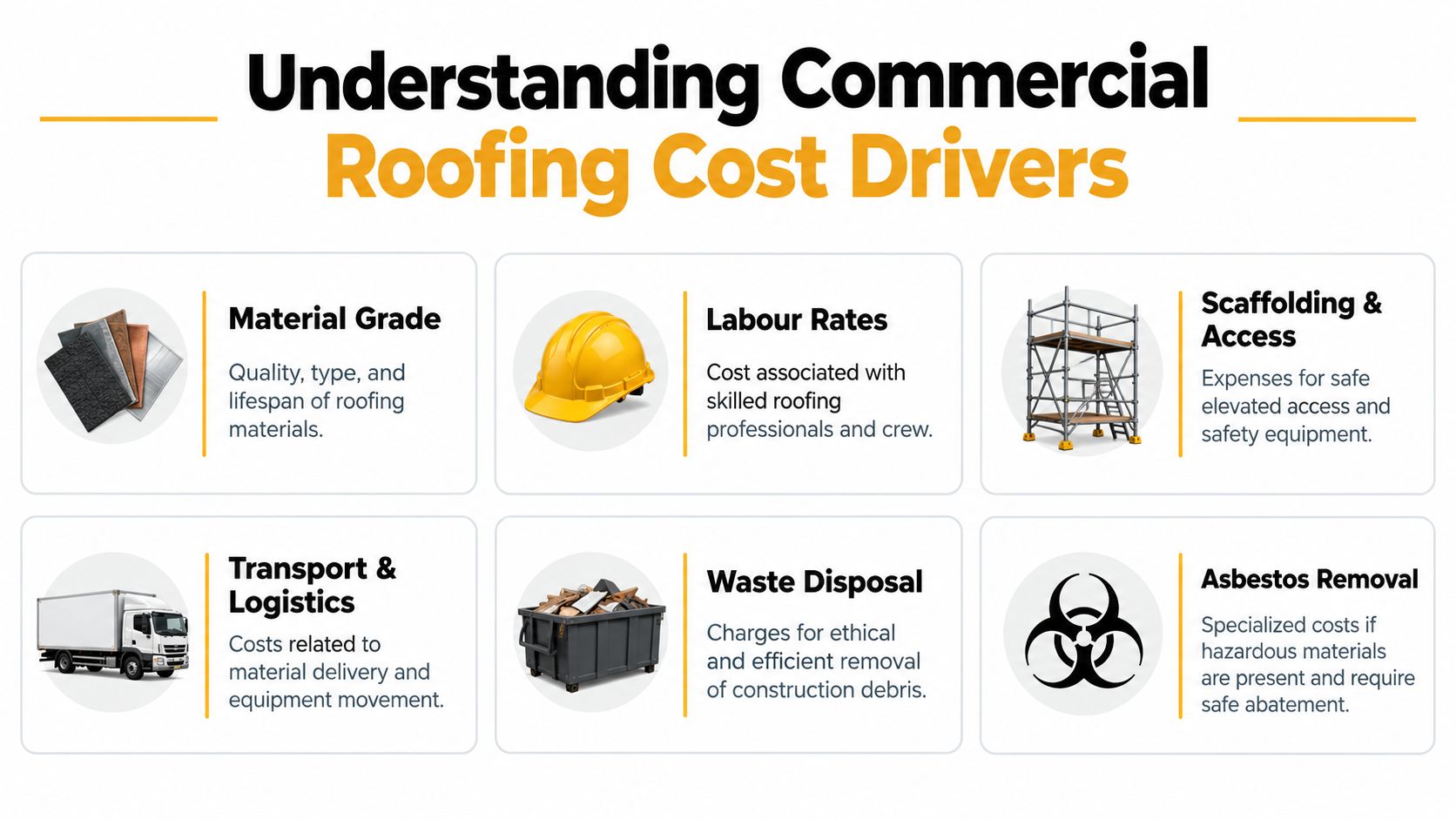
The visible cost categories
Material grade affects performance as well as appearance. The scope should identify the profile, coating, thickness, insulation, fastener type, flashings and gutter specification. A cheaper sheet may become a false saving if it does not suit the site exposure or requires incompatible accessories.
Labour reflects both the roof and the building below it. An open warehouse is simpler to access than a constrained strata property with residents, plant, narrow entry points and sensitive neighbours. Scaffolding, edge protection, access equipment, traffic control and lifting arrangements may form a large part of the price.
Logistics need their own line in the quote. Long sheets, cranes, waste bins, delivery timing and restricted loading areas affect how the crew works. If materials cannot arrive when planned, the programme may change even when the roof design remains suitable.
Hidden compliance costs
Asbestos is a frequently overlooked budget variable in older commercial buildings. It may require testing, licensed removal, containment, approved disposal and records showing how the waste was handled. These steps can affect sequencing as well as cost, particularly where the building must remain operational.
A realistic budget should ask whether those asbestos controls are included. It should also allow for damaged decking, corroded purlins, deteriorated insulation, defective flashings, outlet upgrades and temporary weather protection. A roof can look serviceable from the ground while hidden defects require additional work once sheets are removed.
Use the Sydney roof replacement cost guide to prepare quote questions, then request an itemised proposal instead of one unexplained total. Each allowance should state what triggers a variation, how the change will be documented and who must approve it.
Budgeting principle: The cheapest initial scope may not produce the lowest project cost if it leaves access, asbestos controls, drainage or business disruption unresolved.
Meeting Compliance and Warranty Requirements
Compliance isn't paperwork added after installation. It determines whether the roof is suitable for the building, whether workers can carry out the work safely and whether the owner can demonstrate how the project was delivered.
Metal sheet roofing must meet the relevant NCC Deemed-to-Satisfy requirements, including compliance with AS 1562.1. Standards guidance also requires a weatherproof exterior and directs rainwater into the stormwater drainage system, as explained in the Standards Australia metal roofing guidance. In practice, laps, fixings, flashings, cappings and box-gutter capacity can decide whether a roof remains dry.
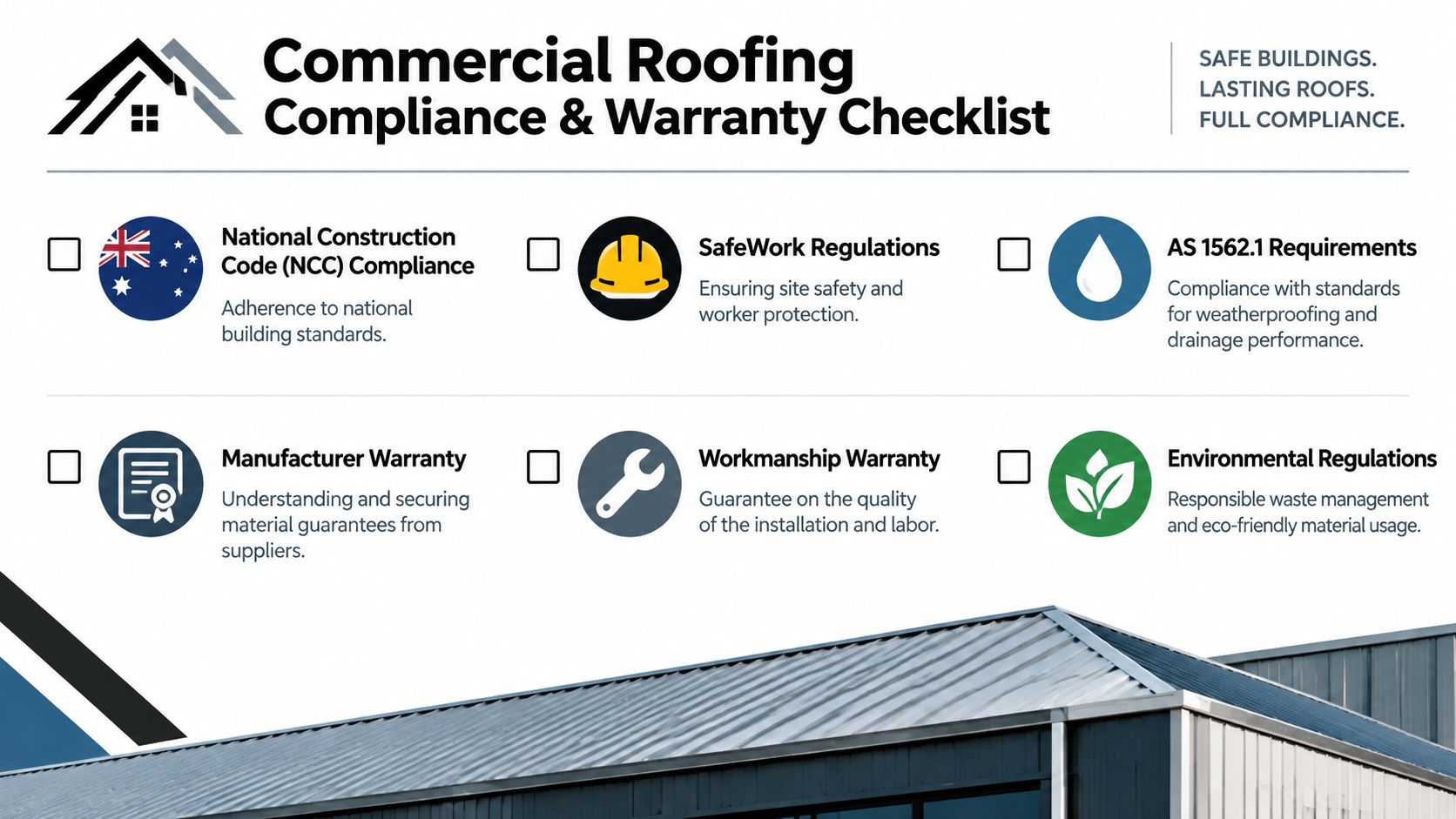
Check the documents before work starts
- NCC compliance: Confirm the proposed system, materials and detailing meet the applicable building requirements.
- AS 1562.1 alignment: Ask how the contractor will address weatherproofing, fasteners, flashings and drainage.
- SafeWork planning: Review roof access, fall prevention, exclusion zones, emergency arrangements and site records.
- Asbestos documentation: Confirm the register, testing results, licensed removal scope and disposal records where relevant.
- Manufacturer warranty: Check the product conditions, maintenance obligations and exclusions.
- Workmanship warranty: Get installation coverage in writing, including the process for reporting defects.
- Handover records: Request photographs, product details, compliance documents and maintenance recommendations.
A warranty isn't a substitute for correct design. Manufacturers may limit coverage if installers use unsuitable fasteners, mix incompatible metals, alter products incorrectly or allow drainage failures to continue. Owners should ask who is responsible for design decisions, who signs off the installation and what maintenance the warranty expects.
Occupied buildings need particular discipline. Keep the asbestos register accessible, record site inductions and make sure building managers know which roof areas are closed. A complete project file gives the owner evidence of responsible control when future maintenance or insurance questions arise.
Selecting the Right Commercial Roofing Contractor
A suitable contractor should be able to explain the roof in operational terms. If the conversation focuses only on sheet colour and a lump-sum price, important risks may remain hidden.
Start with capability
Ask whether the company regularly handles commercial and industrial sites similar to yours. A contractor working on warehouses should understand long roof runs, roof access, skylights, penetrations, box gutters, forklifts, delivery movements and stored stock. A contractor working on strata buildings should also understand resident communication, common property access and staged disruption.
Verify licensing, insurance and asbestos credentials where the scope requires them. Check who will supervise the crew, whether subcontractors are involved and who will manage safety records, waste and variations. A low administrative burden is useful, but it shouldn't come at the expense of clear accountability.
Compare proposals fairly
Give each tenderer the same information, including roof plans, access limitations, operating hours, known hazards and any available asbestos records. Then compare the exclusions as carefully as the inclusions.
Look for these details:
- Inspection evidence: Does the proposal refer to observed defects and photographs?
- Work method: Does it explain removal, access, protection and installation?
- Materials: Are profiles, coatings, insulation, fasteners and flashings named?
- Drainage: Does it address outlets, gutters, falls and overflow paths?
- Site controls: Does it separate workers from staff, residents, customers and vehicles?
- Programme: Does it identify stages, noisy activities and weather contingencies?
- Variations: Does it explain how hidden conditions are priced and approved?
- Handover: Does it include warranties, records, photographs and maintenance advice?
Owners searching for a contractor can use this commercial roofer selection guide to organise their initial questions. Commercial Roofers is one Sydney-based option that provides commercial and industrial roofing, asbestos roof services, inspections, guttering and metal roof replacement, with in-house crews stated as part of its service model.
A strong contractor also communicates before problems become urgent. Set a reporting rhythm, nominate one decision-maker and agree how the site team will notify the business about access changes, weather delays or newly discovered damage.
Common FAQs for Commercial Roofing in Sydney
Does a small repair avoid all approval and safety requirements?
No. Requirements depend on the work, building and local rules, but a small repair still needs a safe method. A repair may involve fragile sheets, asbestos, fall exposure, live services or occupied areas. Request a written scope, access plan and risk controls before work begins.
Can we replace only a few asbestos panels?
Partial replacement may be possible after the material is identified and the contractor confirms that nearby sheets can remain undisturbed. If the bonded area exceeds 10 m², NSW licensing requirements apply, as noted earlier. The work method should explain isolation, removal, disposal and installation of compatible replacement materials. Treat the surrounding roof like a stack of brittle tiles. One careless step can turn a limited repair into a wider contamination and access problem.
How long does a commercial roof replacement take?
There is no single reliable duration for every warehouse or strata building. Roof size, access, weather, material availability, asbestos status, structural repairs, occupied-site controls and staging all affect the programme. Ask for separate stages covering inspection, approvals, procurement, removal, installation and handover, rather than accepting one broad estimate.
Is Colorbond better than a membrane roof?
Neither system suits every building. Colorbond-style metal roofing may fit roofs designed for sheet profiles and accessible drainage. Membranes may suit low-slope areas requiring continuous waterproofing. The choice should follow the roof falls, structure, penetrations, exposure, maintenance plan and how the premises operate.
What gives a roof replacement long-term value?
Accurate diagnosis, compliant materials, effective drainage, compatible fixings, controlled installation and planned maintenance usually matter more than a product label. A sound scope reduces repeat leaks and avoidable disruption while protecting the building and people using it.
Commercial Roofers provides commercial and industrial roof inspections, leak repairs, asbestos removal and replacement, metal roofing, guttering and staged roof replacement across Greater Sydney. If your building has an active leak, ageing sheets or uncertain asbestos records, visit Commercial Roofers to arrange an assessment and discuss a compliant works plan.