
If you're managing a warehouse, strata block, factory, or retail site in Sydney, you've probably had the same conversation more than once. The roof still looks serviceable from the ground, but there are early leaks, faded sheets, rust around fixings, or pressure from ownership to “just paint it and tidy it up”. That's exactly where commercial roof decisions go wrong.
Roof painting services can be a sound asset protection move. They can also become wasted spend if the roof is too far gone, the prep is rushed, or the coating system doesn't match the substrate. For facility managers, the core issue isn't whether paint makes the roof look better. It's whether the work extends service life, satisfies compliance requirements, and lowers future maintenance instead of adding another problem to the budget cycle.
In Sydney, that judgement call matters because labour, access, safety setup, weather windows, and roof condition all affect project value. A cheap quote often strips out the parts that make the coating last.
Table of Contents
- What Commercial Roof Painting Services Actually Involve
- Choosing the Right Coating for Your Commercial Roof
- Calculating the Real ROI of Commercial Roof Painting
- The Project Timeline From Quote to Completion
- Understanding Costs and Compliance in Sydney
- How to Select a Contractor and What to Ask
- Conclusion Making an Informed Decision for Your Asset
What Commercial Roof Painting Services Actually Involve
Commercial roof painting isn't a decorative trade. On a working building, it's a restoration process with cleaning, repairs, substrate preparation, coating selection, and safety controls built into the job.
In Australia, a standard professional roof painting service follows a six-step process that includes high-pressure washing, repairs, a primer or sealer coat, and two coats of roof membrane in line with AS/NZS 2311:2017. Bare surfaces require three coats under that standard, as outlined in this Australian roof painting process guide.
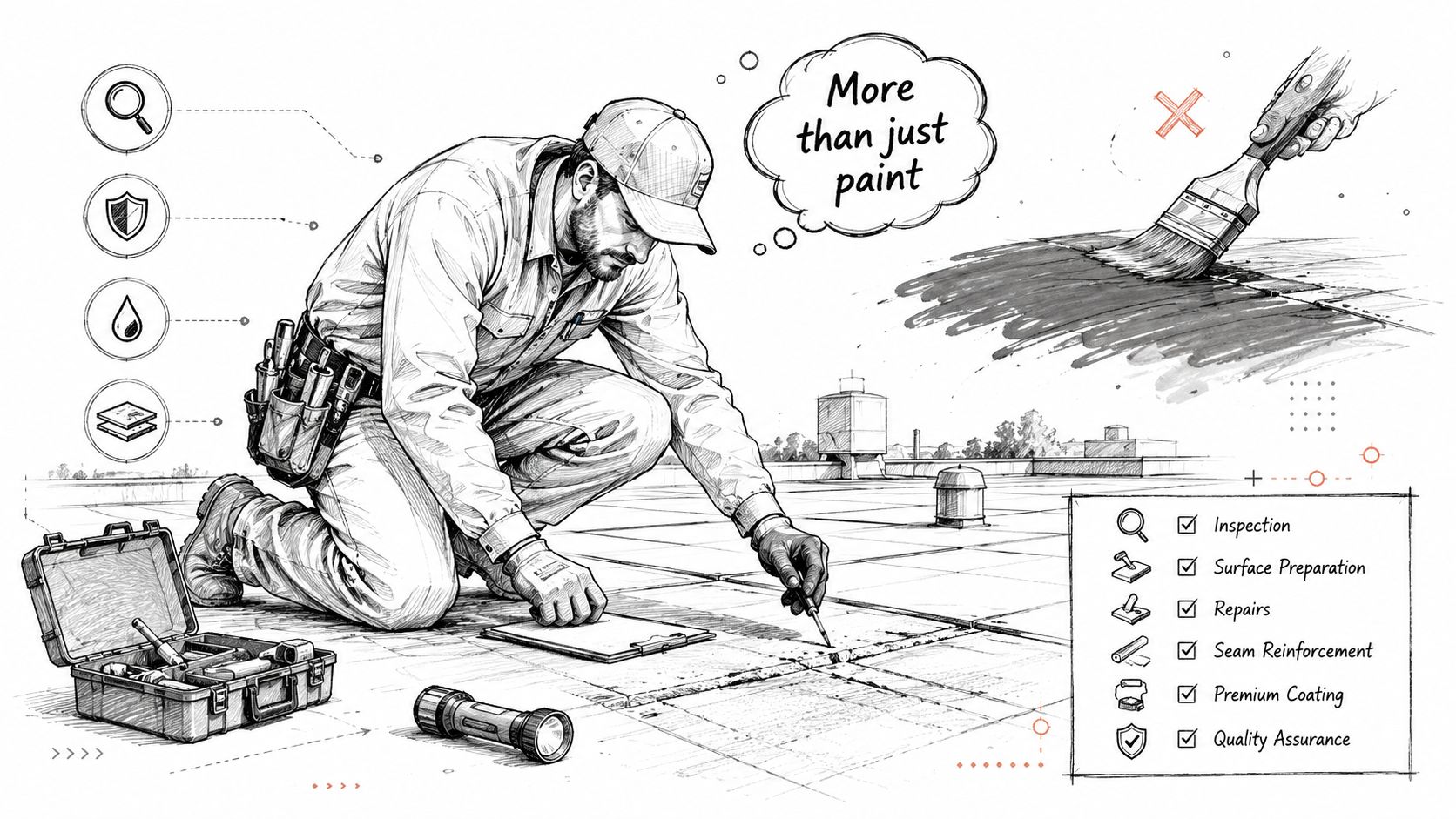
Inspection comes before coating
A proper contractor starts with the roof itself, not the paint chart. That means checking sheet condition, rust spread, fasteners, flashings, penetrations, box gutters, previous patching, ponding areas, and signs of movement around laps and fixings.
On tiled roofs, the inspection shifts toward cracked tiles, ridge cap condition, bedding, and pointing. On metal roofs, the critical question is whether the coating system can still bond to the substrate after cleaning and rust treatment.
If a quote skips detailed inspection notes, it usually means one of two things. Either the contractor is pricing blind, or they're treating every roof as if prep is interchangeable. It isn't.
Cleaning and repairs do the heavy lifting
Most coating failures start with poor preparation. Dirt, chalking, lichen, oxidised metal, and loose material stop primers from bonding properly, which is why high-pressure cleaning is essential.
After cleaning, crews address defects that paint won't solve on its own:
- Metal roofs: rust treatment, spot priming, failed fixings, loose flashings, and local sheet damage
- Tiled roofs: broken tiles, ridge cap re-bedding, repointing, and replacement of damaged sections
- Common leak points: penetrations, laps, gutter interfaces, and poorly sealed transitions
Practical rule: If the contractor talks about colour before they talk about prep, safety, and substrate condition, you're still in sales mode, not project planning.
Primers, membranes, and application method
Once the roof is sound and clean, the coating build matters. The standard sequence is primer or sealer first, then the specified top coats. On commercial metal roofs, that often means an acrylic or membrane-style system designed for exterior exposure and movement.
Application method matters too. Spray application is common on broad metal roof areas because it creates even coverage and faster production on open runs. But rollers and brushes still have a place around details, penetrations, edges, and tight access zones where overspray control matters.
What works is method matched to the roof. What doesn't work is relying on one application technique for every area.
Safety isn't extra
Height safety is part of the work scope, not an optional line item. Any commercial roof painting project should account for access, edge protection, and safe movement across the roof before preparation starts.
That's one reason a professional job costs more than a cosmetic repaint. You're paying for asset preservation, controlled access, and a coating system that has a chance of performing as intended.
Choosing the Right Coating for Your Commercial Roof
The right coating depends on the roof you have, the condition it's in, how much water sits on it, and what the building needs from the system. Sydney commercial roofs aren't all dealing with the same exposures. A warehouse in an industrial corridor, a coastal retail site, and a strata block with patchy older sections won't suit the same specification.
The biggest mistake is accepting a generic “roof paint” proposal without asking what chemistry is being used and why. Different systems handle UV, movement, adhesion, and weathering differently.
Match the coating to the substrate
On metal and Colorbond roofs, adhesion and corrosion management usually drive the decision. The substrate expands and contracts, so the coating has to tolerate movement without losing bond at laps, screws, and cut edges. If you're reviewing options for metal roofing specifically, this guide to painted metal roofing systems is a useful starting point.
On older asbestos roofs, the issue is different. You're not merely improving appearance. You may be dealing with encapsulation strategy, surface stability, access restrictions, and strict handling requirements. The wrong prep method can create a compliance problem before the coating even starts.
On concrete tile roofs, porosity and surface wear become more important. These roofs often need stronger attention to sealing and uniform build because they absorb product differently from metal.
Commercial Roof Coating Comparison
| Coating Type | Best For | Key Benefit | Average Lifespan |
|---|---|---|---|
| Acrylic | Metal roofs, concrete tiles, broad commercial roof areas | Good UV resistance and common use on restored roofs | Varies by substrate, prep, and exposure |
| Elastomeric | Roofs with movement and minor surface irregularities | Flexible film build that can bridge minor movement | Varies by substrate, prep, and exposure |
| Silicone | Areas where moisture resistance is a priority | Strong water resistance on suitable substrates | Varies by substrate, prep, and exposure |
| Polyurethane | High-wear zones and demanding commercial conditions | Hard-wearing finish on correctly prepared surfaces | Varies by substrate, prep, and exposure |
Because there's no verified lifespan data provided here for each chemistry, a contractor should explain expected service life in writing based on the manufacturer's system, site exposure, and maintenance assumptions.
What usually works in practice
For many Sydney metal roofs, a properly specified acrylic system is a practical choice because it's widely used, serviceable, and compatible with common restoration workflows. Where roof movement is more pronounced, flexibility matters more. On difficult moisture-prone areas, water resistance moves higher up the list.
The coating itself isn't the whole answer. Primer compatibility, substrate condition, and film build are just as important. A premium top coat over bad prep still fails like a cheap one.
The best coating on paper is the wrong coating if it doesn't suit the substrate underneath it.
Questions that cut through vague proposals
Before approving a specification, ask the contractor:
- What substrate are you coating: metal, tile, asbestos-cement, or mixed sections?
- What primer is included: and where is spot priming or full priming required?
- How are details handled: penetrations, laps, gutters, flashings, and rusted areas
- What's excluded: because exclusions often reveal where future defects will appear
Good roof painting services don't just name a product. They justify the full coating system in relation to the roof you own.
Calculating the Real ROI of Commercial Roof Painting
Most owners still compare roof painting quotes as if they're buying appearance. They're not. They're deciding whether to spend now on a controlled restoration or spend later on repeat maintenance, leak rectification, internal damage, and another premature coating cycle.
That's why total cost of ownership matters more than headline price.
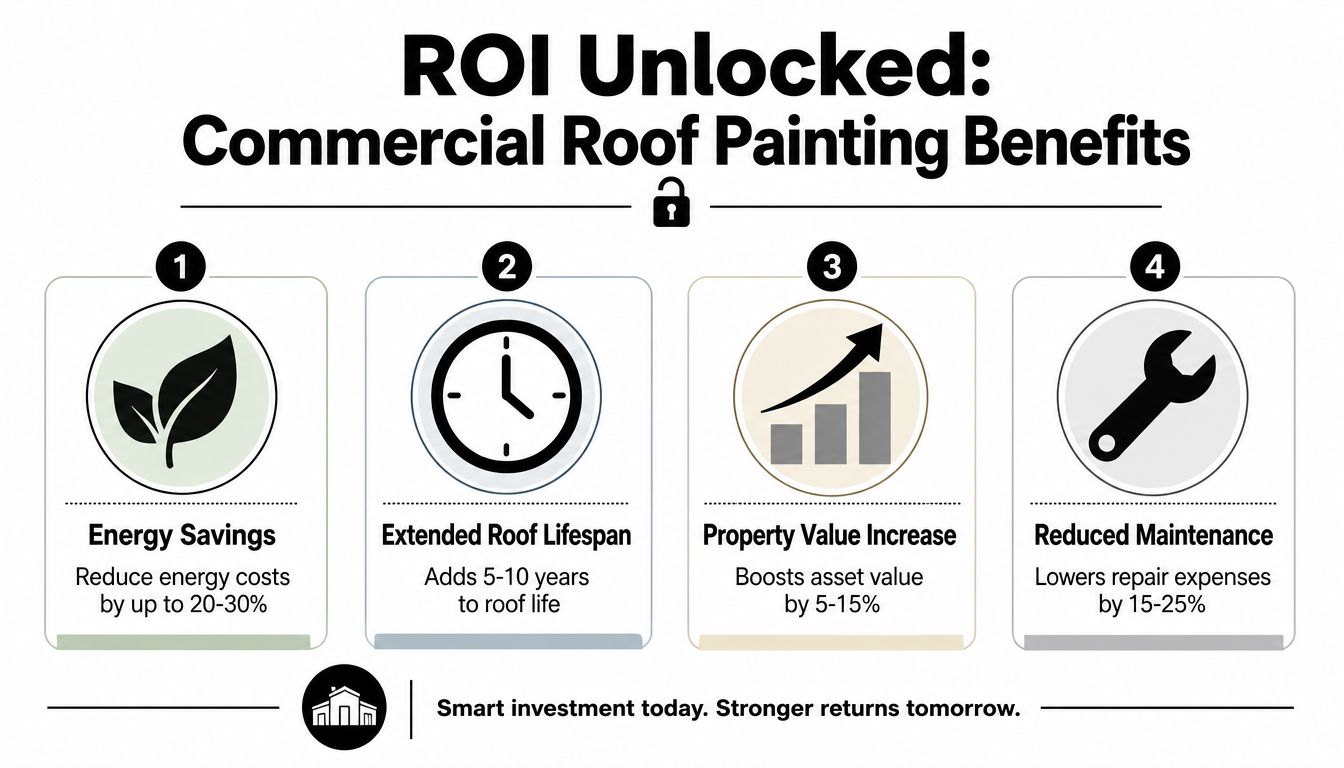
In New South Wales, 68% of industrial roof failures stem from substandard coating degradation, and using certified, high-durability coatings can reduce maintenance frequency by 40%, according to this NSW roof painting cost and performance reference. That's the number facility managers should focus on when they're weighing one cheap quote against a properly specified system.
Where the return actually comes from
The return on a commercial coating project usually shows up in four places.
First, you defer larger capital work if the roof is still structurally paintable. That only counts as savings if the coating system is properly built and the substrate is suitable.
Second, you reduce avoidable maintenance churn. If crews stop coming back for the same local failures, access issues, and leak tracing, the site runs cleaner and the budget gets more predictable.
Third, reflective systems can support thermal performance on the right building. If that's relevant to your site, this article on reflective roof coating options explains where those systems fit.
Fourth, you lower operational risk. Water entry above stock, plant, switchgear, ceilings, or tenanted areas is rarely just a roof issue once it gets inside.
Cheap coatings usually cost more
Many projects go awry. An owner sees two quotes with a noticeable gap and assumes the lower number is better buying. Often it isn't.
The cheaper proposal commonly removes the exact items that protect long-term value:
- Reduced preparation: less cleaning, little rust treatment, no meaningful repairs
- Thin specification: downgraded primer or fewer coating stages
- Minimal safety setup: lower upfront cost, higher project risk
- Weak detail treatment: penetrations and flashings left as future call-backs
A roof can look acceptable at handover and still be set up to fail early.
ROI only counts when the roof is a paint candidate
A coating project is financially sound when the roof has enough integrity left to hold the system. If the roof has advanced corrosion, unstable substrate sections, failing laps, or legacy issues that paint won't correct, the apparent savings disappear.
Spend where the roof can return value. Don't spend to postpone an obvious replacement decision by one budget cycle.
The strongest ROI comes from treating roof painting services as a selective intervention, not a default answer. That means the best commercial advice is sometimes to paint, and sometimes to stop before coating and move to replacement planning.
The Project Timeline From Quote to Completion
From the client side, a good project feels organised long before paint hits the roof. You should know what's being inspected, how access will work, when noisy prep will happen, and what weather conditions could move the programme.
In Australia, roof coatings need the right environmental window. Optimum application conditions are 15°C to 30°C with light wind, because adhesion and finish quality can suffer outside that range, as noted in this roof repainting guidance on weather and application conditions.
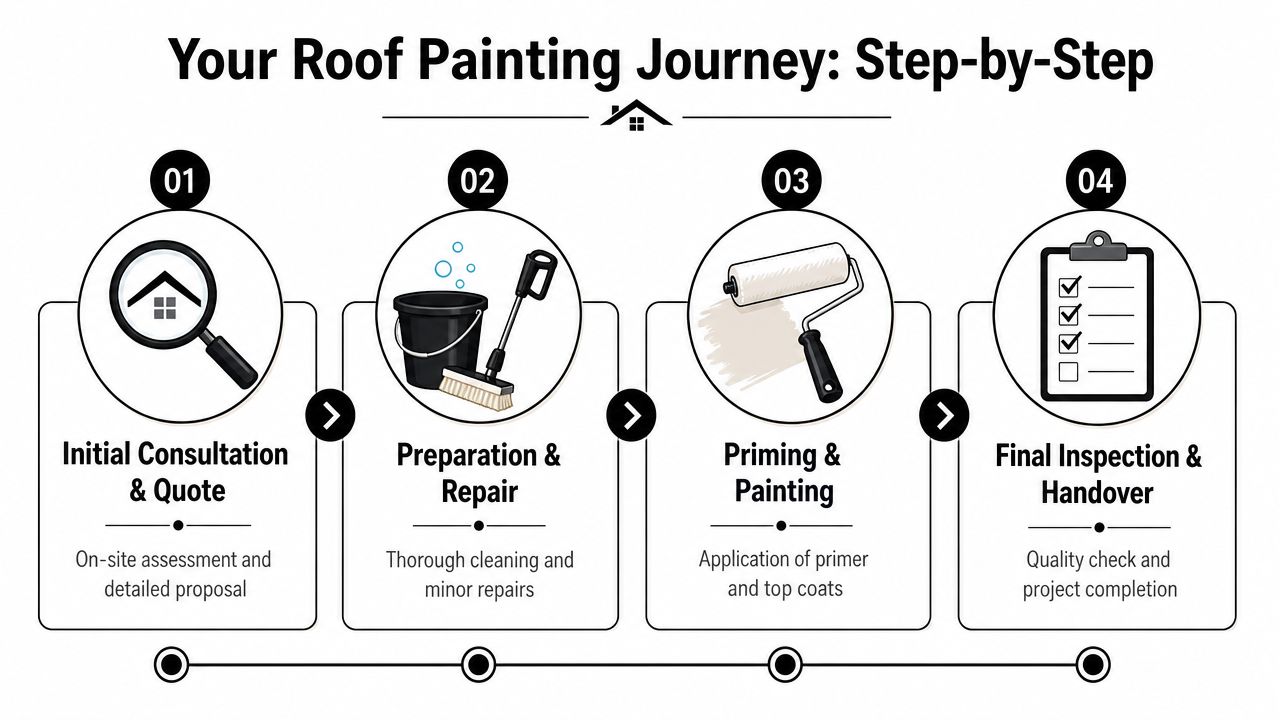
Stage one on-site assessment and quote
The first visit should do more than produce a number. A competent contractor checks roof type, sheet or tile condition, access points, edge protection needs, penetrations, gutter interfaces, previous repairs, and obvious failure zones.
For a facility manager, this is the point to flag operational constraints. Delivery hours, tenant access, noise-sensitive areas, exclusion zones, and fragile roof sections all affect the work plan.
A vague site measure followed by a generic proposal is usually a warning sign.
Stage two preparation and safety setup
This is often the busiest part of the programme. Access systems are installed, exclusion zones are marked, and cleaning begins. On operating sites, this stage is where coordination matters most because pressure washing, debris control, and movement of crew and equipment can affect day-to-day operations.
Preparation also reveals what the initial inspection couldn't fully confirm from a distance. Once the roof is cleaned, hidden rust, failed fixings, and local substrate issues become easier to identify.
Stage three coating application
Once the roof is dry, repaired, and cleared for coating, the primer and top coats are applied in sequence. This stage tends to move quickly on open roof runs and more slowly around details.
If weather changes, a disciplined contractor pauses rather than pushing on with a compromised application window. Clients sometimes get frustrated by that. They shouldn't. Rework after a rushed coat is far more disruptive than a short weather delay.
A realistic timeline includes weather risk, cure time, and access constraints. A rushed timeline usually means someone is assuming perfect conditions that won't hold.
Stage four final inspection and handover
The closeout phase should include a final walk-through, defect note resolution, and a record of what was completed. On commercial roofs, handover is also the right time to confirm any maintenance obligations, access controls, and areas that still warrant monitoring.
From a facility manager's perspective, the smoothest projects are the ones where the contractor explains the sequence clearly, updates the programme when conditions shift, and doesn't leave site coordination to guesswork.
Understanding Costs and Compliance in Sydney
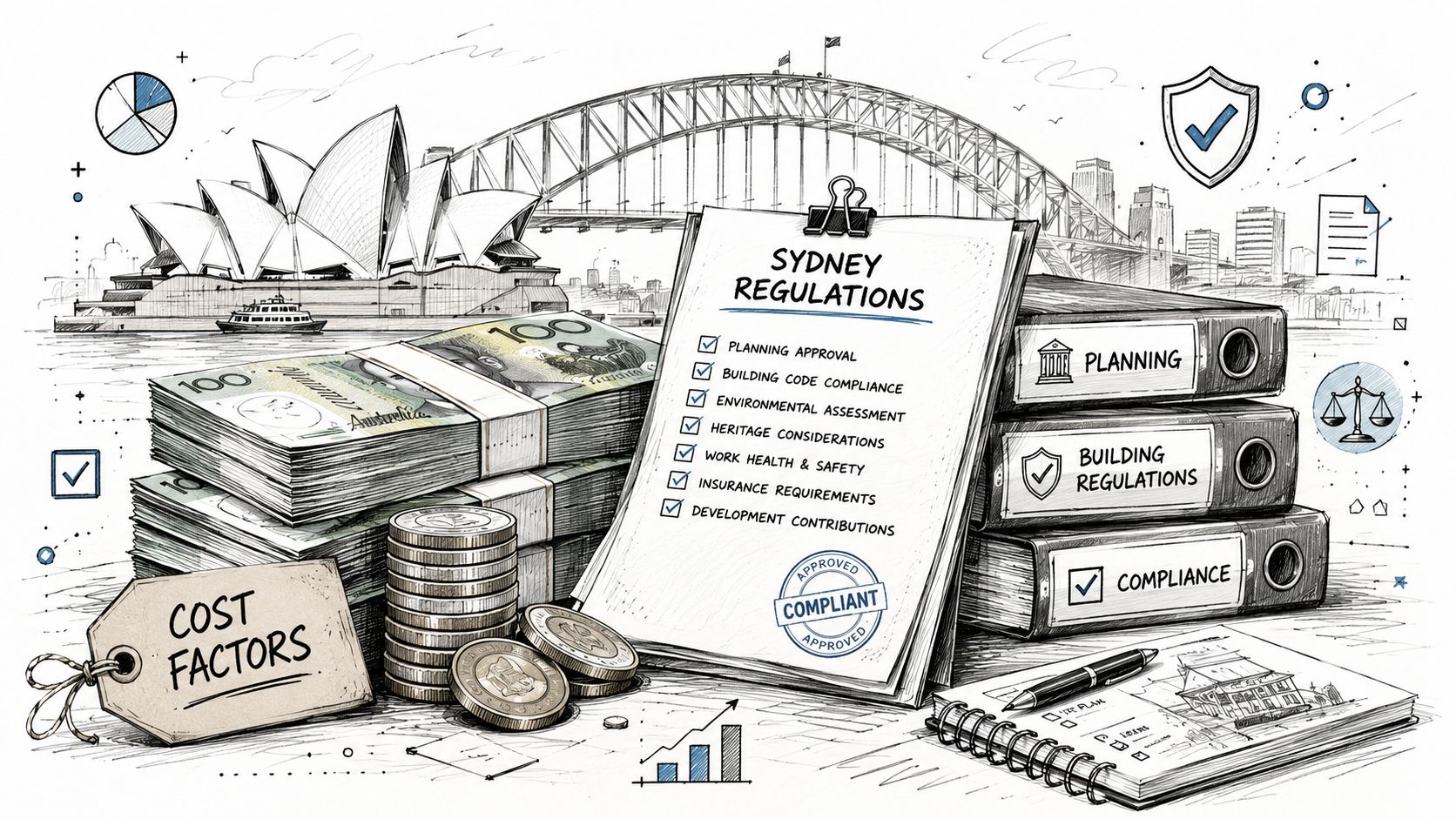
A facility manager usually sees the same question come up around year 15 or 20. Spend on coating now, or stop patching and budget for replacement. In Sydney, that decision should be based on service life, access risk, tenant disruption, and compliance exposure. Price per square metre matters, but total cost of ownership matters more.
For metal roofs in Sydney, a full commercial roof restoration and paint job often sits around $20 to $40 per square metre, and labour rates in New South Wales average about $45 per hour, according to IBISWorld data on the Australian painting and decorating industry. The same source also notes that standard Sydney roof painting jobs commonly range from $3,500 to $15,000, depending on scope, materials, and safety requirements.
A quote only tells part of the story. The key question is what that spend buys you. On a sound roof with manageable corrosion, coating can defer a major capital replacement and improve asset presentation at a far lower upfront cost. On a roof with widespread sheet loss, failed laps, recurring leaks, or heavy corrosion at fixings and penetrations, paint can become an expensive holding pattern.
That distinction is where many owners lose money. A cheap coating on a roof that should have been replaced does not reduce lifecycle cost. It adds another project, another mobilisation, and often another round of access costs within a short period.
What drives the final quote
Two roofs with similar area can land in very different price bands because commercial pricing is shaped more by condition and site constraints than by area alone.
The biggest cost drivers are usually:
- Roof condition: rust treatment, sheet replacement, fixing replacement, and local leak repairs can change the scope quickly
- Access complexity: edge protection, anchor use, EWPs, crane lifts, traffic control, and restricted delivery windows all affect labour and setup costs
- Coating specification: primers, corrosion-inhibiting systems, extra film build, and high-durability top coats cost more than a basic repaint
- Occupied-site controls: schools, warehouses, strata buildings, and healthcare sites each bring different permit, noise, access, and staging requirements
- Documentation and supervision: SWMS, inductions, permits, inspections, and site management all take time and need to be priced properly
This is why a low number needs scrutiny. If one contractor is materially cheaper than the others, check whether they have excluded repairs, underspecified access, or assumed a simpler roof than the one you have.
For owners comparing local providers, it helps to review what a commercial roofer near you in Sydney typically handles on occupied sites before treating quotes as directly comparable.
Compliance costs are part of asset protection
Sydney commercial roof painting is tied to working-at-heights obligations, site-specific safety planning, and access controls. Those requirements are part of the job cost because they are part of the job.
If the roof has brittle sheets, skylights, fragile zones, congested plant, or difficult edges, the compliance burden rises. So does the cost. That is normal. Cutting those controls does not create value for the owner. It transfers risk to the building owner, the contractor, and everyone on site.
This video is a useful reference point for how roof work safety and planning need to be taken seriously on site:
What to review before approving the spend
A proper proposal should let you judge whether coating is a sensible maintenance investment or just a delay before replacement.
Review these points closely:
- Scope detail: cleaning, rust treatment, repairs, primers, top coats, and exclusions should be clear
- Substrate assumptions: older roofs need the contractor to state what condition they have priced for
- Access and safety method: edge protection, access equipment, permits, and shutdown assumptions should be visible
- Repair allowances: check whether the quote includes likely remedial works or pushes them into variations
- Handover records: warranties, product data, maintenance advice, and completion records should be listed
The best commercial decisions are rarely about getting the lowest quote. They are about paying once for the right scope, meeting compliance requirements properly, and avoiding a paint project on a roof that is already at replacement stage.
How to Select a Contractor and What to Ask
A facility manager usually finds out whether they chose well six or twelve months after practical completion, not on the day the quote is approved. If the coating starts peeling around fasteners, if rust stains return through the laps, or if water entry keeps showing up after a “restoration,” the cheapest tender quickly becomes the most expensive decision on the roof.
That is why contractor selection needs to stay tied to total cost of ownership. The question is not who can apply paint. It is who can assess whether painting still makes financial sense, or whether the asset has already crossed into replacement territory.
Start with proof of judgement
Older commercial roofs in Sydney often sit in the grey zone between viable restoration and deferred capital works. In that zone, a contractor should be able to explain the decision path clearly. If they jump straight to colour charts, warranty years, or square metre rates, they are skipping the part that protects your budget.
Check four things first:
- Licence and insurance: confirm current NSW licensing, public liability, and workers compensation
- Commercial project history: ask for examples on occupied buildings, industrial sites, strata complexes, or retail assets, not just house repainting
- Supervision model: find out who will run the site each day and who signs off preparation and final coating thickness
- Local roofing scope: review whether they handle broader commercial roof issues or only painting, because diagnosis usually decides whether the spend holds up
If you are comparing local firms, it helps to review the service profile of a Sydney commercial roofer with experience across repair, restoration, and replacement decisions.
Questions that test whether the quote is worth accepting
Put these in writing. Good contractors answer them directly. Weak proposals usually get vague at this point.
Why is this roof still a paint candidate?
Ask what condition they observed in the sheets, fixings, laps, box gutters, penetrations, and flashings.What signs would push you toward replacement instead?
A credible contractor should be willing to say where coating stops being good asset management.What preparation is included, line by line?
You want detail on washing, rust treatment, failed fastener replacement, sealant work, spot priming, full priming, and any remedial metal work.What defects are being left in place?
Every roof has limits. You need to know what the coating will not solve.How are detail areas handled?
Valleys, penetrations, ponding zones, laps, and previous patch repairs often fail before open sheet areas do.Who checks the substrate before coating starts?
Many problems come from painting over a roof that was never properly prepared or was already too far gone.What is excluded from the price?
Future variations typically make up these exclusions.
Ask for evidence that matches your roof, not generic marketing
Photos of shiny finished roofs do not tell you much. A useful contractor can show how they handled roofs with similar age, profile, corrosion level, access limits, and operational constraints.
Ask for:
- Comparable project examples: similar roof type and building use
- Preparation photos: before primer and before top coat
- Scope documents: enough detail to compare contractors properly
- Defect records or inspection notes: what they found and what they recommended
- Clear exclusions and assumptions: especially around hidden corrosion, sheet integrity, and wet areas
A short factual mention is worth making here. Commercial Roofers handles commercial and industrial roofing work in NSW with in-house crews. For facility managers, that can make supervision and accountability clearer than a model built around layered subcontracting.
Watch for the contractor who refuses to rule painting out
The difference is in the diagnosis. A competent roofer will sometimes recommend replacement, or staged replacement, instead of a coating job. That answer can be inconvenient in this year's budget cycle, but it can still be the lower-cost decision across the next five to ten years.
If a contractor cannot explain why paint is the right option for your roof, they are not helping you control costs. They are helping you defer them, often into a more difficult compliance and capital works problem later.
Conclusion Making an Informed Decision for Your Asset
A commercial roof painting project should never be reduced to colour, appearance, or a quick maintenance line item. The actual decision is whether the roof is still a sound candidate for restoration, whether the coating system suits the substrate, and whether the contractor has priced the work with proper safety and compliance controls built in.
That's why the best buying framework is simple. Start with condition. Then test paintability. Then review preparation, coating specification, access method, and exclusions. Only after that should price become the comparison tool.
For Sydney property owners and facility managers, the long-term value sits in avoiding the wrong project. A well-run coating job can protect a serviceable roof and reduce future maintenance pressure. A poorly judged one can lock you into repeat failures, more call-backs, and a replacement decision that arrives after you've already spent money trying to avoid it.
The practical approach is to push every contractor past the sales language. Ask what they'll repair, what they won't, why the roof can be painted, and what conditions could shorten the result. Ask to see how they've handled similar commercial roofs. Ask what site controls they'll put in place while the building keeps operating.
That's how roof painting services should be assessed. Not as a cosmetic upgrade, but as an asset management decision with operational, financial, and compliance consequences.
If you treat it that way, you're far more likely to protect the building, the budget, and the people using the site every day.
If you need a second opinion on whether your roof should be painted, restored, or replaced, Commercial Roofers can assess the roof condition, scope the compliance requirements, and provide a clear proposal for Sydney commercial and industrial sites.