
That sinking feeling you get when you spot a water stain on the ceiling is a universal sign of trouble. When it's your commercial metal roof, quick, smart action is crucial to stop a small drip from turning into a business-halting disaster. The first few minutes are all about safely containing the water and getting a quick lay of the land from the ground.
Table of Contents
- What to Do When Your Commercial Metal Roof Leaks
- Diagnosing Problems on Your Metal Roof
- Understanding Safety Protocols for Metal Roof Work
- Deciding Between Metal Roof Repair and Replacement
- Your Top Questions About Fixing Metal Roofs in Sydney
What to Do When Your Commercial Metal Roof Leaks
A leak is never just a bit of water. It's a direct threat to your stock, your expensive machinery, and the very structure of your building. Your immediate priority has to be damage control inside.
Clear the area directly under the leak. Get buckets in place to catch the drips and move any valuable assets well out of the way. A quick tip: don't just throw a tarp over sensitive electronics. Condensation can build up underneath and cause just as much damage as a direct drip.
Once you’ve managed the immediate chaos indoors, you can turn your attention to the roof itself. A safe, ground-level inspection can tell you a lot. Look for the obvious culprits:
- Gutters choked with leaves and debris, causing water to back up and overflow.
- Clearly visible holes or punctures in the metal sheeting.
- Roof panels that look loose or have shifted, which often happens after a bout of high wind.
Understanding the Common Causes
Leaks rarely happen for no reason; they almost always come from a specific point of failure. From what we see in the field, it's usually corroded roof sheets, old and cracked sealants around skylights and vents, or fasteners that have worked themselves loose over time. Knowing these common weak spots helps you have a much more productive conversation when you call in a professional. Our guide on detecting roof leaks dives deeper into how to play detective.
This flowchart gives you a clear, step-by-step plan for what to do the moment you discover a leak.
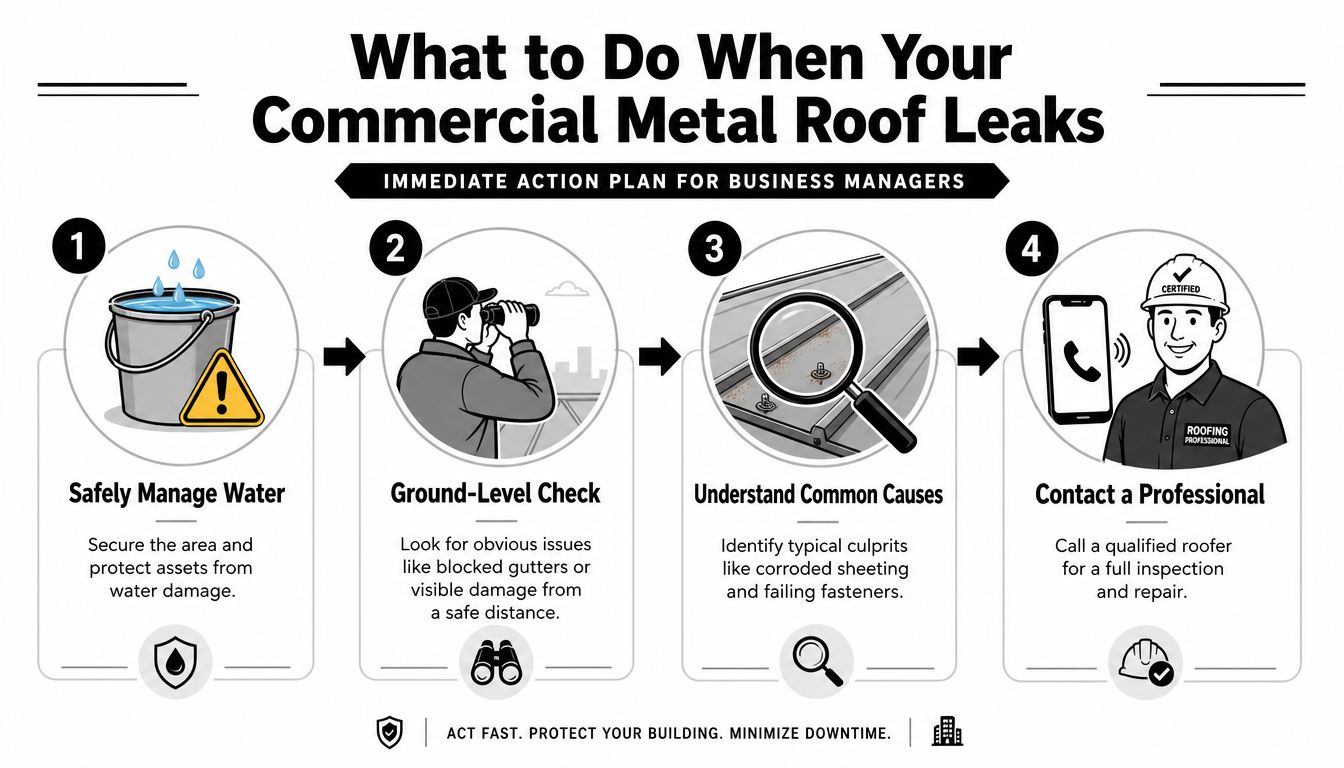
Following a structured response—from controlling the water inside to getting expert help—is always the most effective path forward.
It’s no surprise that metal is the go-to roofing material for commercial buildings in Australia. In fact, over 90% of new commercial builds use it. Why? It's incredibly resilient against our harsh weather, with a typical lifespan of 30 to 50 years that easily outclasses other materials. But even the toughest roofs need attention to reach that age. You can find more data on roofing materials and their lifespans over at Owner Inspections Australia.
Diagnosing Problems on Your Metal Roof
So, you've got a leak. The first instinct is often to look directly above the drip, but on a commercial metal roof, the water's entry point can be metres away from where it shows up inside. Before you can even think about a fix, you need to play detective and trace the problem back to its source.
Knowing what to look for will not only help you understand the urgency of the situation but also allow you to have a much clearer conversation with a professional roofer when you call one.
Where to Start Your Inspection
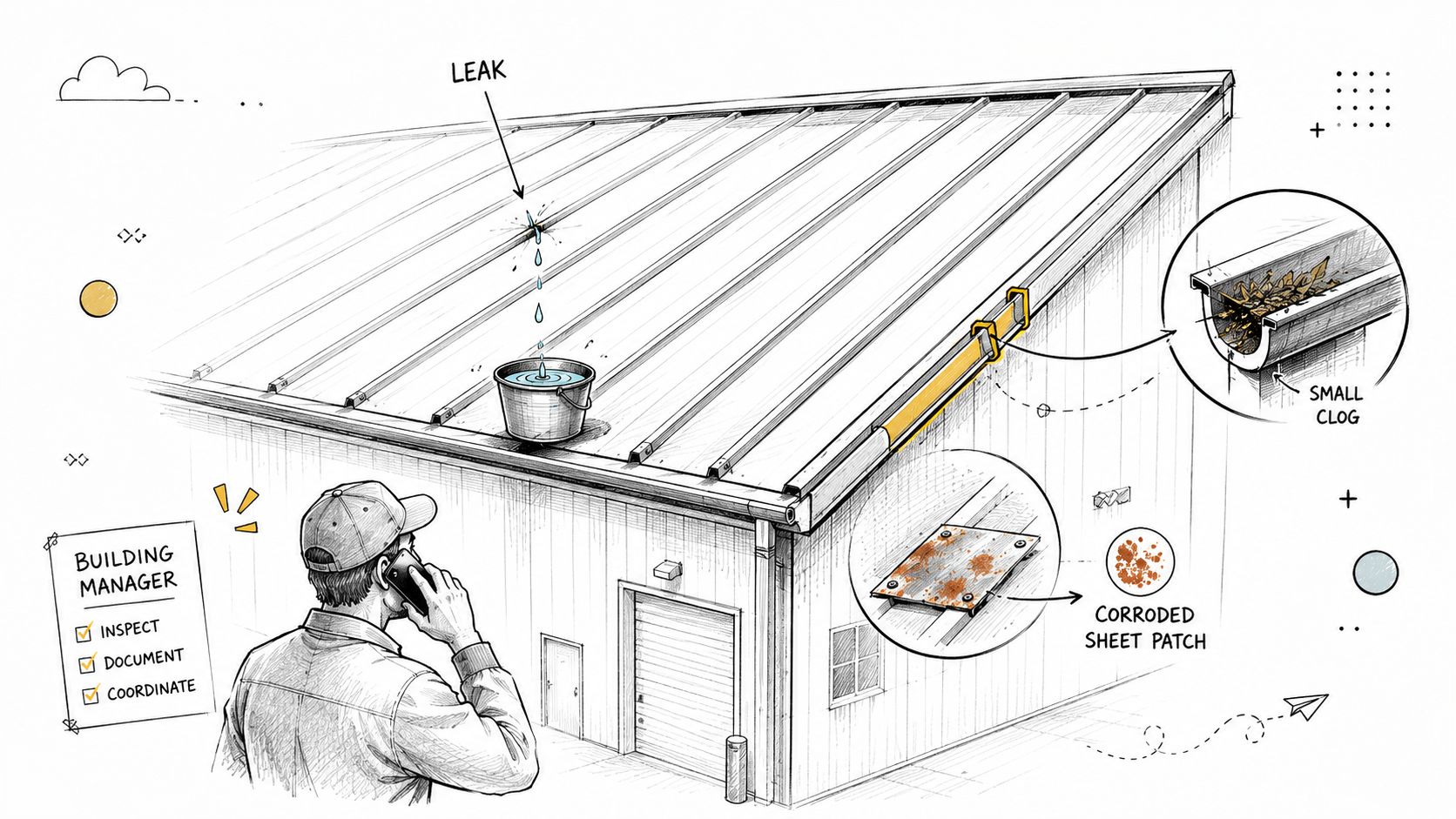
Most metal roof leaks boil down to a few usual suspects. When I get up on a roof, the first things I check are the fasteners and sealant joints—these are the most common points of failure.
Over the years, the sun's harsh UV rays absolutely destroy the small neoprene washers on roof screws. You'll see them cracked, perished, or completely missing, creating a tiny but direct path for water. Look for screws that have backed out, look rusty, or have lost their protective washer.
It's the same story for sealants. The flexible seals around skylights, vents, air conditioning units, and pipes are constantly expanding and contracting. Eventually, they become brittle, shrink, and pull away from the metal sheeting. That small gap is all it takes for a significant leak to start.
Understanding the Clues: Rust, Water Stains, and More
Noticing the tell-tale signs of trouble early can save you a fortune. For instance, don't ignore standing water. If you see pools of water, especially in box gutters or on flat-pitched roof sections, that’s a major red flag. It points to a blocked drain or a design flaw, and that constant moisture will fast-track corrosion and put a huge strain on your roof seams.
A Roofer's Tip: It's important to know the difference between surface rust and serious corrosion. A bit of light, reddish-brown rust can often be treated. But if you see rust that is dark, flaking, or bubbling, it means the metal's protective coating is gone and the sheet itself is failing.
To help you quickly assess what you're seeing, here’s a quick-reference chart of common issues we encounter on commercial buildings.
Metal Roof Problem Diagnostic Chart
This table breaks down the symptoms you might find, their most probable causes, and whether you can tackle it yourself or need to call in the professionals.
| Symptom (What You See) | Likely Cause | Recommended Action (DIY Fix vs Professional) |
|---|---|---|
| Water stains on ceilings or walls inside | Failed fasteners, cracked sealant, or compromised roof sheet | Professional: Finding the exact entry point can be tricky. Professionals have the tools and experience for accurate leak detection. |
| Visible rust spots or flaking paint | The protective coating is breaking down due to age, UV exposure, or physical damage. | DIY (Minor): Small surface rust spots can be cleaned and treated with a rust converter and touch-up paint. Professional (Widespread): Deep, flaking corrosion requires professional assessment and likely sheet replacement or recoating. |
| Water pooling or "ponding" on the roof | Blocked gutters/drains, improper roof slope, or structural sagging. | DIY: Safely clearing debris from gutters and downpipes. Professional: If drainage issues persist, a roofer needs to assess the roof's design and structure. |
| Loose, lifted, or rattling roof sheets | Failed fasteners that have backed out or sheared off due to thermal movement. | Professional: Re-securing sheets often requires specialised tools and replacing fasteners with the correct oversized type. This is a critical structural and safety issue. |
| Gaps or cracks around pipes, vents, or skylights | Sealant has failed due to age and weather exposure. | DIY (Minor): Small, accessible gaps can be re-sealed with a high-quality, flexible roofing sealant as a temporary measure. Professional: For a durable, long-term repair, a roofer should properly prepare the surface and apply the correct commercial-grade sealant. |
Getting familiar with these common problems is a great first step. For a deeper dive into tracking down those elusive water entry points, our guide on how to detect roof leaks offers even more detailed techniques.
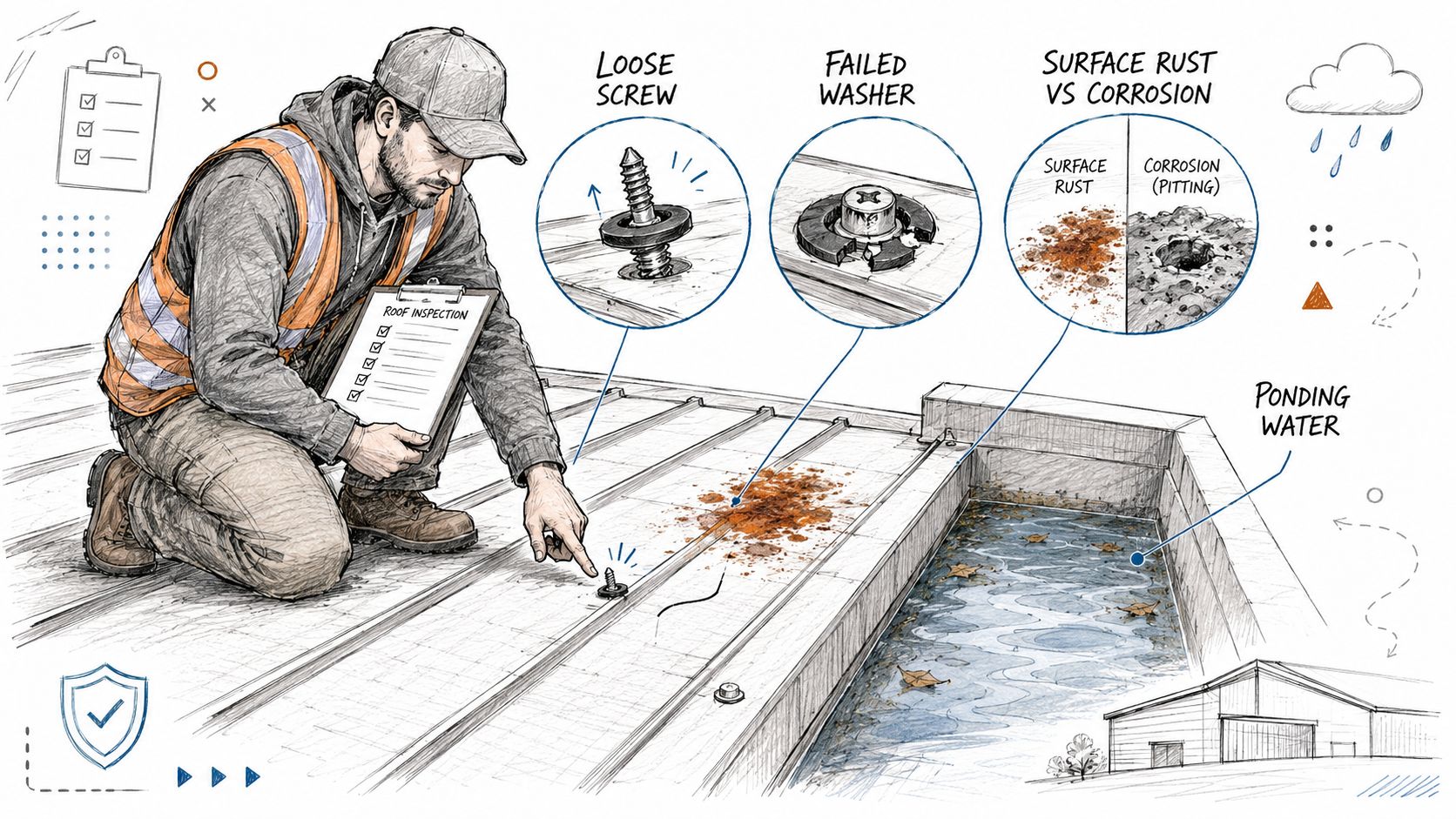
When you find a leak in your commercial metal roof, the first instinct is to stop the water—fast. But it’s crucial to understand the difference between a quick, temporary patch and a genuine, long-lasting repair to fix a metal roof. A quick fix is purely an emergency measure, not a permanent solution.
For instance, you might discover a small puncture from a fallen tree branch or a piece of debris. The temptation is to slap a thick layer of roofing cement or silicone over it. And yes, that might stop the immediate drip. But it’s a band-aid solution at best. These patches break down surprisingly fast under the harsh Australian sun and simply can't cope with the constant expansion and contraction of the metal sheeting.
Contrasting Temporary Patches with Professional Repairs
A professional repair does more than just cover up the problem; it gets to the root cause to make sure it doesn't come back. Simply painting over a spot of rust, for example, is a classic mistake. It hides the unsightly brown stain but does absolutely nothing to stop the corrosion that's eating away at the metal underneath.
Professional Insight: A permanent fix for corrosion is never just cosmetic. It involves grinding or sanding all the rust back to clean, bare metal. Only then do we treat the area with a rust-inhibiting primer and apply a compatible, multi-layer coating system designed specifically for metal roofs. This is how you properly restore the roof's protective barrier.
The same goes for a failed screw or fastener. You can't just tighten it or add a dab of sealant. A real repair means removing the old, worn screw, properly sealing the hole, and then installing a new, oversized fastener with a fresh, high-quality washer. This is what creates a secure and properly watertight seal that will last.
Ultimately, a temporary patch might buy you a few days to get organised. But relying on it for too long is a gamble that almost always leads to more extensive, and expensive, damage to your building's structure and the assets inside. Think of professional repairs not as a cost, but as an investment in your building's longevity.
Understanding Safety Protocols for Metal Roof Work
Thinking about heading up onto your commercial roof to fix a metal roof leak yourself? Let me be blunt: it’s not just a bad idea—it's incredibly dangerous. As professional roofers, we live by strict safety protocols, especially here in NSW, because we know a simple misstep at height can be life-altering. Safety is our number one priority, and understanding what that involves will give you a real appreciation for the work a qualified contractor does.
A metal roof presents its own unique set of dangers. That sleek surface can become treacherously slippery with just a bit of morning dew, let alone rain. Another hidden threat I've seen too many times are those old, weathered skylights and clear roof panels. They can become brittle over time and may not support your weight, creating a serious fall-through risk.
A Critical Reminder: Never, ever walk on a roof without proper fall protection. The risks are simply too high. Professional teams are legally required to use comprehensive safety systems to ensure everyone goes home at the end of the day.
Managing these risks requires a multi-layered approach to safety that’s a world away from just leaning a ladder against the wall.
Essential Fall Protection Measures
Safe Work NSW mandates robust fall prevention systems for any work performed at height. This isn't just a suggestion; it's a legal requirement designed to save lives, and reputable companies take it very seriously.
When a professional team arrives on-site, you’ll see them implement one or more of the following:
- Guardrails and Edge Protection: The best way to stop a fall is to prevent it from happening in the first place. Temporary railing systems installed around the work area create a physical barrier—the gold standard in fall prevention.
- Harness and Anchor Systems: For tricky spots where guardrails aren't practical, every worker will be kitted out in a full-body harness. This is connected by a lanyard to a secure anchor point on the roof, acting as a crucial fall-arrest system.
- Safe Access: A standard ladder simply doesn't cut it for safe access on most commercial sites. Proper access is usually established with secure scaffolding or, more commonly, a mechanised elevating work platform (EWP), also known as a cherry picker or scissor lift.
Beyond these measures, a crucial part of any pre-work assessment involves identifying and cordoning off those fragile roof surfaces I mentioned earlier. We also have to be constantly aware of electrical hazards from solar panel systems or nearby power lines. These are all non-negotiable parts of the job.
Deciding Between Metal Roof Repair and Replacement
Knowing when to stop patching and start planning for a full roof replacement is one of the biggest calls a building owner has to make. It’s a decision that carries a lot of weight, both for your budget and the long-term protection of your asset.
You’re not just trying to stop a drip; you’re trying to make the smartest financial move. After years in the field, I’ve seen countless owners try to squeeze one more year out of a failing roof, only to end up with bigger, more expensive problems down the line.
When Replacement Becomes the Only Real Option
So, what’s the tipping point? When do the endless patch-ups stop making sense?
A good rule of thumb we use in the industry is the 25% rule. If more than a quarter of your roof is covered in significant rust, has widespread damage, or is springing leaks in multiple areas, a full replacement is almost always the more economical choice. Trying to chase down every little issue on a roof that’s systematically failing is a losing battle. You’ll spend far more on temporary fixes over time than you would on a permanent solution.
Age is another critical factor. Once a metal roof hits its 20-year mark, it’s time for a very honest assessment. If you're seeing signs of old age—like sagging between the purlins, persistent leaks around fasteners, or cracked seals—it’s a clear signal that the roof is at the end of its service life. Pushing it further risks serious damage to the insulation, ceiling, and even the building's structural components.
Of course, if your building has an older roof made with asbestos, the decision is made for you. Replacement isn't just an option; it's the only safe and compliant way forward. For more on this, you can check out these insights from Owner Inspections on roof replacement timelines in Australia.
A new roof isn't just an expense; it's a capital investment. A modern metal roof significantly improves your building's energy efficiency, reduces ongoing maintenance costs, and boosts overall property value.
While the upfront cost can look daunting, you have to weigh it against the alternative. A full replacement buys you decades of reliability and protects everything and everyone inside your building.
If you’re leaning toward a replacement, our guide on how to replace a roof in Sydney breaks down the process and what to expect.
Your Top Questions About Fixing Metal Roofs in Sydney
When your commercial building's roof starts causing problems, you need clear answers, and you need them fast. We get a lot of the same questions from clients across Sydney, so here are some straightforward answers to help you figure out your next steps to fix a metal roof.
How Much Does It Cost to Fix a Metal Roof Leak in Sydney?
This is usually the first question everyone asks, and the honest answer is: it depends entirely on what’s causing the leak.
If we find the problem is just a few failed screws where the neoprene washers have perished from years of sun exposure, you’re likely looking at a fairly simple fix. A repair like that, replacing a handful of fasteners, might only cost a few hundred dollars and take a couple of hours.
However, a bigger issue like widespread corrosion tells a different story. If rust has eaten through the roof sheets, a simple patch won't do. In that case, the only real solution is to replace the affected sheets, which could run into several thousand dollars. We always conduct a thorough roof inspection first, then give you an itemised quote so there are no hidden surprises.
Can a Rusted Colorbond Roof Be Repaired?
Yes, but only if you catch it early. If you've just got some light surface rust starting to show, we can often treat it. The process involves grinding the rust right back to the bare metal, applying a specialised rust-inhibiting primer, and then finishing it with a topcoat to match your existing roof colour.
A Word of Warning: Trying to patch over significant rust is a short-term fix that is guaranteed to fail. If the corrosion has created holes or is covering a large section of the roof, replacing the damaged Colorbond sheets is the only permanent solution.
How Long Should a Professional Metal Roof Repair Last?
When it's done right, a professional repair should be a long-term, if not permanent, solution for that specific issue. It's not about just patching the problem; it's about correcting the original failure.
For instance, when we replace failed screws, we don’t just put the same size back in. We use new, oversized fasteners with superior seals. This creates a brand-new, watertight connection that solves the problem for good. We stand by our work and provide solid warranties on our repairs to give you complete peace of mind.
My Building Has an Old Asbestos Roof. Can You Repair It?
Absolutely not, and for very critical safety reasons. It's illegal and incredibly dangerous to drill, cut, or even high-pressure clean an asbestos roof. Disturbing the material releases harmful fibres into the air, posing a serious health risk to everyone in the vicinity.
The only safe and legally compliant path forward for a damaged asbestos roof is complete removal by a licensed professional. We are fully licensed to manage this entire process for you—from the safe, contained removal and disposal of the asbestos to the installation of a brand-new, high-performance metal roof.